



인비절라인이란? 일반 교정과 어떤 차이가 있을까요
투명하니까 그냥 심미 장치일까요? 인비절라인은 단계별 장치로 치아를 이동시키는 엄연한 교정 치료입니다. 일반 고정식 교정과 무엇이 다른지 차근차근 정리해 드립니다.
안녕하세요, 명일동 강동구 교정 치과 서울더자연치과 치과의사 김민수입니다. 진료실에서 교정 상담을 하다 보면 “치아교정을 하고 싶은데 철사 장치가 겉으로 보이는 건 부담스러워요”, “투명한 장치로 하는 인비절라인은 일반 교정과 무엇이 다른가요” 같은 이야기를 자주 듣습니다.
치아교정을 알아보다 보면 한 번쯤 인비절라인이라는 이름을 접하게 됩니다. 겉으로는 투명한 마우스피스처럼 보이기 때문에 단순히 심미적인 교정 장치라고 생각하기 쉽지만, 실제로는 치아 이동을 계획해 단계별 장치를 착용하는 교정 치료의 한 방법입니다. 오늘은 인비절라인이 무엇인지부터 일반 교정과 어떻게 다른지 정리해 드리겠습니다.
인비절라인이란 무엇일까요
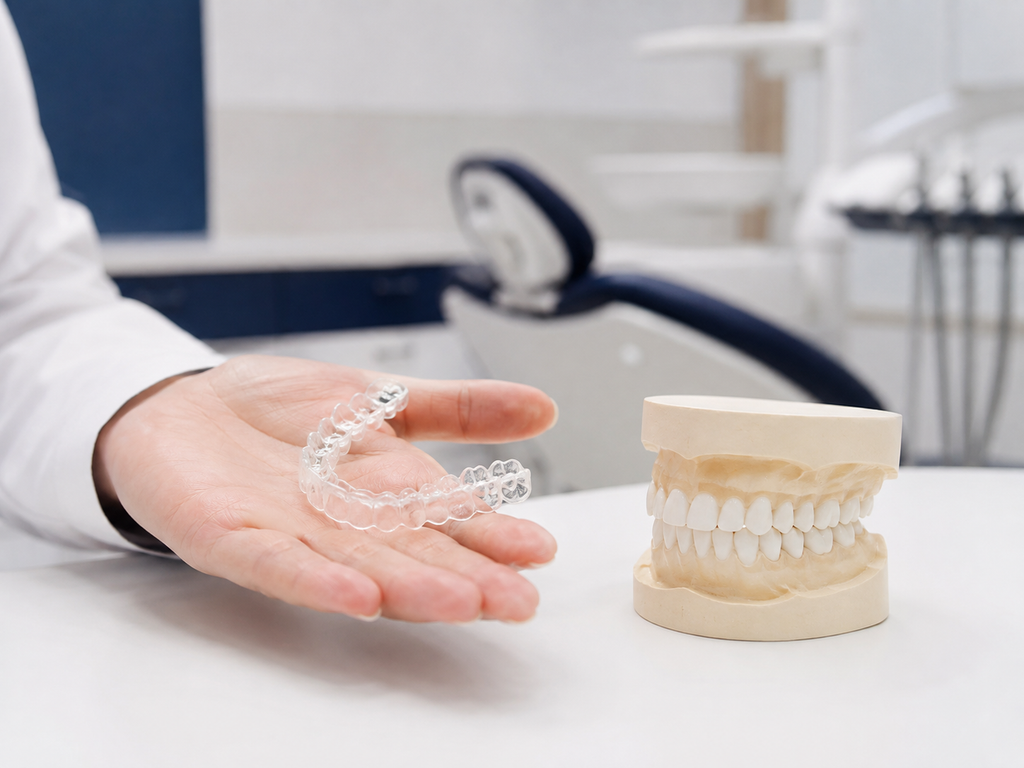
인비절라인(Invisalign)은 투명한 탈착식 교정장치를 이용해 치아를 단계적으로 이동시키는 투명교정 시스템입니다. 현재 치아 상태와 목표로 하는 치아 이동을 바탕으로 여러 단계의 교정장치를 제작하고, 치료 계획에 따라 순서대로 교체하면서 치아에 힘을 전달합니다.
미국교정치과의사협회(AAO) 역시 투명교정 장치를 환자의 치아에 맞춰 제작하고, 단계별 장치를 이용해 치아를 점진적으로 이동시키는 방법으로 설명하고 있습니다. 쉽게 말하면 철사 하나를 조절해 치아를 이동시키는 방식이 아니라, 각 단계에 맞게 만들어진 투명 장치를 바꾸어 착용하면서 치아를 움직이는 방식이라고 이해하시면 됩니다.
일반 교정과 가장 큰 차이는 고정식과 탈착식입니다
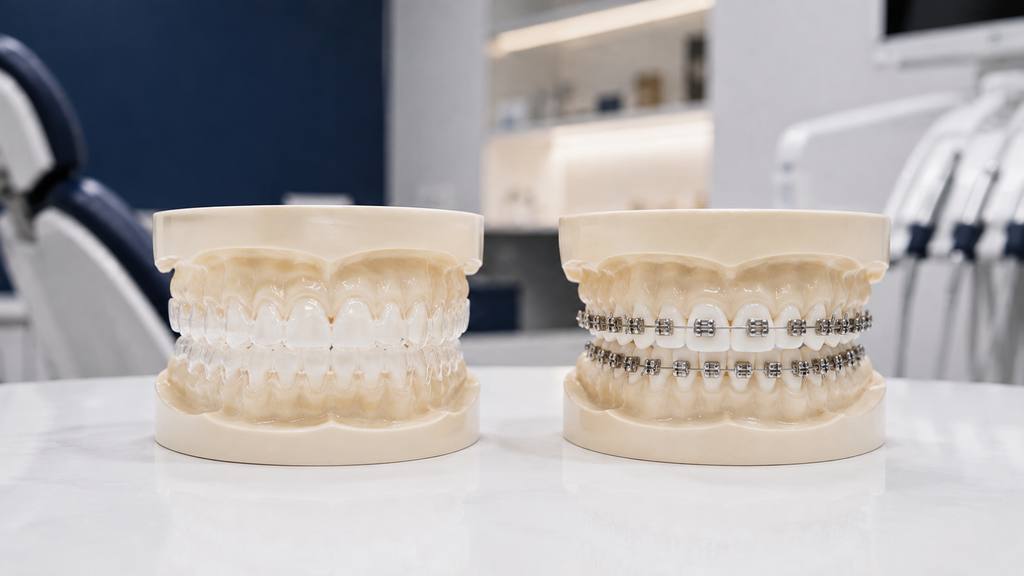
일반적으로 많이 떠올리는 교정은 치아 표면에 브라켓을 붙이고 철사를 연결하는 고정식 교정입니다. 환자가 임의로 장치를 빼기 어렵고, 장치와 와이어를 이용해 치아에 힘을 전달합니다.
반대로 인비절라인은 필요할 때 환자가 직접 장치를 뺄 수 있는 탈착식 교정입니다. 식사를 하거나 양치할 때 장치를 제거할 수 있다는 것이 일상생활에서 느끼는 큰 차이입니다. 투명한 재질을 사용하기 때문에 일반적인 금속 브라켓에 비해 교정 장치가 상대적으로 덜 눈에 띈다는 특징도 있습니다.
| 구분 | 인비절라인 | 일반 고정식 교정 |
|---|---|---|
| 장치 형태 | 투명한 탈착식 장치 | 치아에 브라켓 부착 |
| 치아 이동 방식 | 단계별 장치 교체 | 와이어를 통한 이동 |
| 식사·양치 | 장치 제거 가능 | 장치를 지속 부착 |
| 심미성 | 비교적 눈에 잘 띄지 않음 | 금속 장치가 보일 수 있음 |
| 관리 핵심 | 꾸준한 착용 관리 | 장치 주변 꼼꼼한 칫솔질 |
장치를 뺄 수 있다고 오래 빼두어도 되는 것은 아닙니다
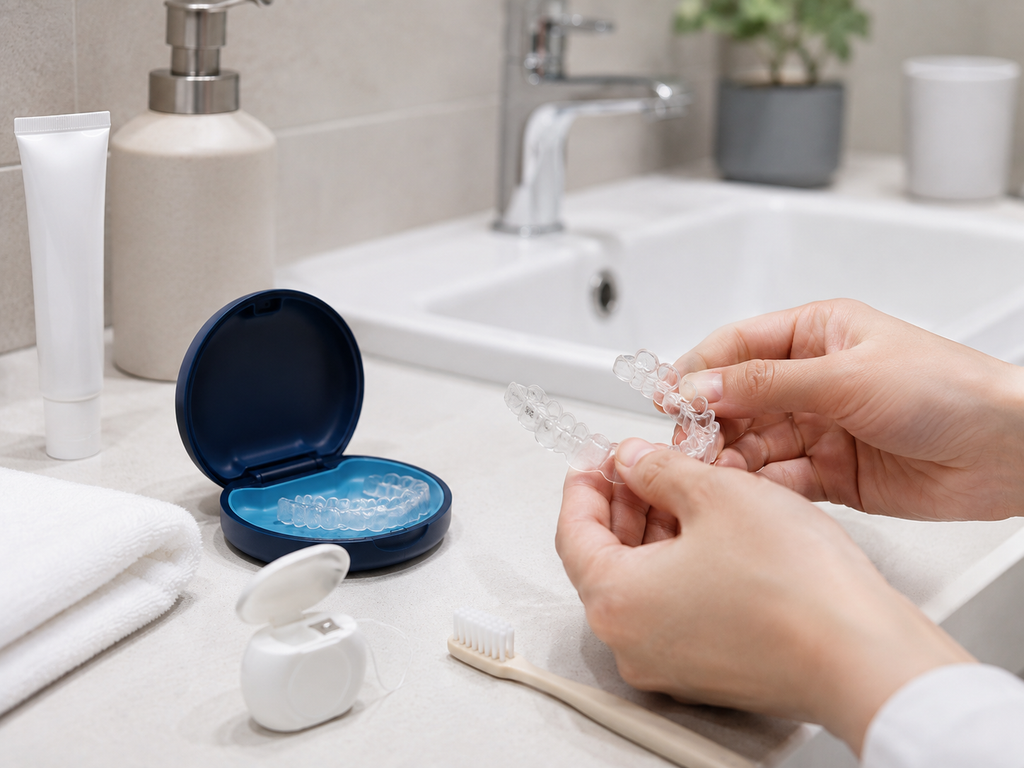
인비절라인의 장점 중 하나가 탈착이 가능하다는 것이지만, 이것이 곧 원할 때마다 자유롭게 빼놓아도 된다는 의미는 아닙니다. 인비절라인 공식 안내에서는 일반적으로 하루 약 20~22시간 착용하도록 안내하고 있습니다. 식사와 양치 등의 시간을 제외하면 대부분의 시간 동안 장치를 착용하는 셈입니다.
따라서 인비절라인은 눈에 덜 띄고 탈착할 수 있다는 편의성이 있는 대신, 스스로 착용 시간을 잘 지켜야 한다는 점이 중요합니다. 장치를 장시간 빼두는 일이 반복되면 계획한 치아 이동과 실제 치아 위치 사이에 차이가 생길 수 있으므로, 실제 착용시간과 장치 교체 시기는 담당 의료진의 지시에 따르는 것이 좋겠습니다.
식사와 양치는 조금 더 편할 수 있습니다
고정식 교정은 브라켓과 와이어가 치아에 붙어 있기 때문에 음식물이 장치 사이에 남지 않도록 세심하게 관리해야 합니다. 인비절라인은 식사할 때 장치를 빼고 평소와 비슷하게 식사할 수 있으며, 양치와 치실 사용 시에도 장치를 제거할 수 있습니다. AAO에서도 투명교정 장치는 식사와 칫솔질·치실 사용 시 제거하는 형태라고 안내하고 있습니다.
다만 식사 후 양치하지 않은 상태로 장치를 다시 착용하면 음식물과 플라크가 치아 표면에 머무를 수 있으므로 구강위생 관리는 여전히 중요합니다. 장치를 청결하게 관리하는 것 역시 치료 과정의 일부라고 생각하시는 것이 좋겠습니다.
그렇다면 인비절라인이 일반 교정보다 더 좋은 걸까요
여기에서 가장 주의해야 할 부분입니다. 인비절라인과 일반 교정 중 어느 하나가 모든 환자에게 더 좋은 방법이라고 단정하기는 어렵습니다. 치아가 얼마나 겹쳐 있는지, 앞니와 어금니의 맞물림은 어떤지, 위아래 턱의 관계는 어떤지, 어느 방향으로 어느 정도 치아를 움직여야 하는지에 따라 적합한 치료 방법이 달라집니다.
투명교정으로 치료할 수 있는 범위도 넓어지고 있지만, 환자의 교합 상태나 필요한 치아 이동에 따라 고정식 교정 또는 두 가지 방법을 함께 고려하는 것이 더 적절할 수도 있습니다. AAO 역시 모든 환자에게 투명교정이 적합한 것은 아니며, 상태에 따라 교정 방법을 결정해야 한다고 안내하고 있습니다. 따라서 단순히 안 보이는 교정을 하고 싶다는 이유만으로 장치를 정하기보다는, 치아와 잇몸, 교합 상태를 먼저 정확하게 확인하는 과정이 중요합니다.
인비절라인에서도 어태치먼트를 사용할 수 있습니다
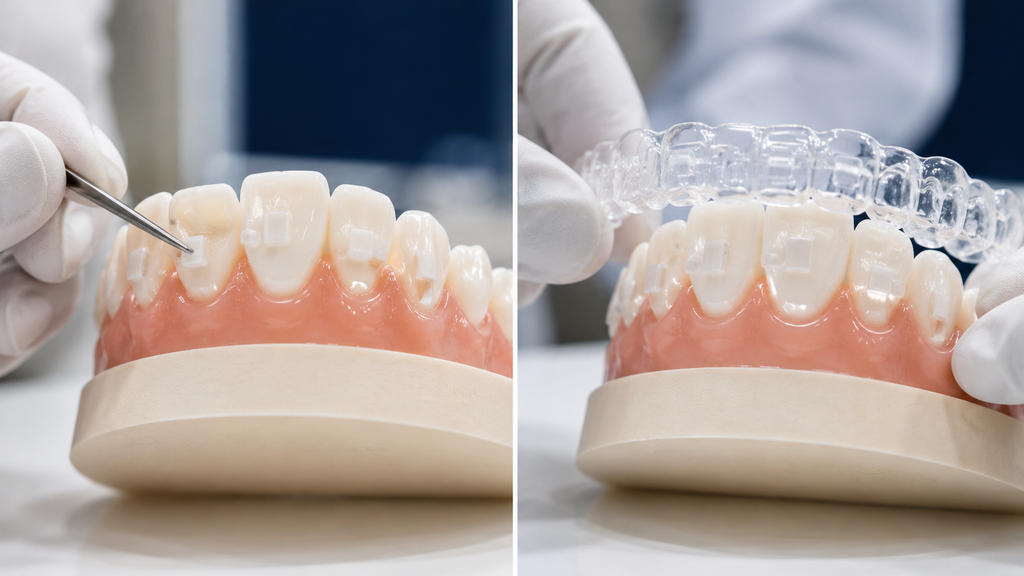
“투명한 장치만 끼면 되는 것 아닌가요” 인비절라인을 처음 알아보시는 분들이 자주 하시는 질문입니다. 실제로는 필요한 치아 이동에 따라 치아 표면에 어태치먼트(attachment)라는 작은 치아색 돌기를 부착하기도 합니다.
이 구조물은 투명교정 장치가 치아에 보다 효과적으로 힘을 전달하도록 돕는 역할을 합니다. 따라서 인비절라인이라고 해서 반드시 투명 장치만 사용하는 것은 아니며, 치료 계획에 따라 어태치먼트나 고무줄 등이 함께 사용될 수 있습니다.
인비절라인을 고려한다면 무엇을 확인해야 할까요
교정 방법을 결정할 때에는 장치의 모양만 보는 것보다 진단과 치료 계획을 확인하는 것이 중요합니다. 치아 배열뿐 아니라 치아가 맞물리는 교합, 잇몸 상태, 필요한 치아 이동량 등을 종합적으로 평가해야 합니다. 특히 교정치료를 시작하기 전에는 구강 상태를 직접 확인하고 필요한 검사 결과를 토대로 치료 계획을 세워야 합니다.
또한 투명교정은 장치를 만들어 주는 것으로 치료가 끝나는 것이 아닙니다. 치료 도중 계획한 방향으로 치아가 이동하고 있는지 확인하고, 필요한 경우 계획을 조정하는 과정도 중요합니다. 강동구·명일동에서 인비절라인을 알아보고 계신다면 단순히 투명 장치를 사용할 수 있는지만 확인하기보다, 현재 교합 상태를 충분히 진단하는지, 치료 과정과 장치 착용법을 이해하기 쉽게 설명하는지, 치료 도중 치아 이동 상태를 지속적으로 확인하는지 등을 살펴보시는 것이 좋겠습니다.
자주 묻는 질문
Q. 인비절라인은 정말 잘 안 보이나요?
투명한 소재로 제작되기 때문에 일반적인 금속 브라켓 교정과 비교하면 상대적으로 눈에 덜 띄는 편입니다. 다만 가까운 거리에서는 장치나 치아에 부착된 어태치먼트가 보일 수 있습니다.
Q. 인비절라인은 하루 종일 착용하나요?
식사와 양치 등의 시간을 제외하고 대부분의 시간 착용합니다. 인비절라인 공식 안내에서는 일반적으로 하루 약 20~22시간 착용을 안내하지만, 실제 착용 방법은 개인의 치료 계획과 의료진의 지시에 따라야 합니다.
Q. 인비절라인을 끼고 밥을 먹어도 되나요?
일반적으로 식사할 때에는 장치를 제거합니다. 식사 후에는 치아를 깨끗하게 관리한 뒤 다시 착용하시는 것이 좋습니다.
Q. 덧니가 있어도 인비절라인이 가능한가요?
치아가 겹쳐 있는 경우에도 투명교정을 고려할 수 있지만, 겹침 정도와 교합, 필요한 치아 이동에 따라 치료 방법이 달라질 수 있습니다. 검사를 통해 적용 가능 여부를 판단해야 합니다.
Q. 인비절라인이 철사교정보다 치료가 더 빠른가요?
장치 종류만으로 치료 기간의 우열을 단정할 수 없습니다. 필요한 치아 이동량과 교합 상태, 치료 난이도, 장치 착용 정도 등에 따라 치료 기간이 달라질 수 있으므로 개인별 진단이 필요합니다.
English Summary
Invisalign vs Traditional Braces: What Actually Differs
Invisalign is a clear aligner orthodontic system that moves teeth gradually through a series of custom-made, removable trays rather than a single adjustable wire. Many people first assume it is simply a cosmetic mouthpiece, but it is a genuine orthodontic treatment in which each stage of tooth movement is planned in advance and delivered by swapping one aligner for the next according to the treatment plan. The American Association of Orthodontists similarly describes clear aligners as custom-fabricated devices that move teeth incrementally through staged trays.
The most meaningful difference from conventional treatment lies in the distinction between fixed and removable appliances. Traditional braces bond brackets to the tooth surface and connect them with an archwire, so the patient cannot remove the appliance at will, and force is delivered continuously through the wire. Invisalign, by contrast, is a removable system that the patient can take out when needed. Being able to remove the aligner for meals and for brushing is the difference most patients notice in daily life, and because the trays are made of a transparent material, they tend to be less visible than metal brackets.
Removability, however, does not mean the aligner can be left out for long stretches. Invisalign’s official guidance generally recommends wearing the trays roughly 20 to 22 hours per day, which means the aligner is worn for most of the day once meals and brushing are set aside. The convenience of a discreet, removable appliance therefore comes with the responsibility of maintaining consistent wear time. When aligners are repeatedly left out for long periods, a gap can open up between the planned tooth movement and the actual position of the teeth, so wear time and tray-change intervals should follow the treating clinician’s instructions.
Eating and oral hygiene can be somewhat more comfortable with clear aligners. Because fixed braces keep brackets and wires bonded to the teeth, food debris must be managed carefully around the appliance. With Invisalign, the aligner is removed to eat much as usual and can also be taken out for brushing and flossing, a point the AAO likewise notes. That said, reinserting the aligner without brushing after a meal can trap food and plaque against the tooth surface, so oral hygiene remains essential, and keeping the aligner itself clean is part of the treatment.
It is important not to conclude that one approach is universally superior. Whether Invisalign or fixed braces is more appropriate depends on how crowded the teeth are, how the front and back teeth occlude, the relationship between the upper and lower jaws, and the direction and amount of tooth movement required. Although the range of cases treatable with clear aligners continues to widen, some bites and movements are better served by fixed appliances or by a combination of both, and the AAO also advises that clear aligners are not suitable for every patient. For this reason, the choice should not rest on the desire for an invisible appliance alone; an accurate assessment of the teeth, gums, and occlusion should come first.
Patients are sometimes surprised to learn that Invisalign treatment is not only about wearing clear trays. Depending on the movements needed, small tooth-colored bumps called attachments may be bonded to the tooth surface to help the aligner deliver force more effectively, and elastics may also be used as part of the plan. This is one reason it can be misleading to assume that a clear-aligner case is inherently simpler or faster than a bracket case; the underlying biomechanics still have to move real teeth through bone, and the appliance is only the means of delivering that force.
Choosing an orthodontic method is therefore less about the shape of the appliance and more about the diagnosis and treatment plan behind it. Before treatment begins, the arrangement of the teeth, the way they occlude, the condition of the gums, and the amount of movement required should all be evaluated together, and the plan should be built on the necessary examinations and records rather than on appearance alone. It is also worth remembering that clear-aligner treatment does not end once the trays are fabricated: confirming that the teeth are moving in the planned direction and adjusting the plan when needed is an ongoing part of the process.
Anyone considering Invisalign in the Gangdong-gu and Myeongil-dong area is encouraged to look at whether the clinic thoroughly diagnoses the current bite, explains the process and wear instructions clearly, and monitors tooth movement throughout treatment, rather than confirming only whether clear aligners are available. Ultimately, the right method is the one that fits the individual’s own teeth and occlusion, determined through proper examination and bite analysis rather than through a preference for a particular appliance. Because each patient’s situation differs, an in-person examination and consultation are recommended before deciding on a treatment plan, and individual results can vary.
마치며
인비절라인은 투명하고 탈착할 수 있는 장치를 이용한다는 점에서 일반적인 고정식 교정과 분명한 차이가 있습니다. 식사와 양치할 때 장치를 제거할 수 있고 비교적 눈에 덜 띈다는 장점이 있지만, 그만큼 정해진 착용시간을 스스로 잘 지켜야 합니다. 또한 모든 치아 상태에서 동일한 방법이 적용되는 것은 아니므로, 인비절라인이 가능한지 고정식 교정이 더 적합한지는 구강검사와 교합 분석을 바탕으로 판단해야 합니다.
강동구, 명일동에서 치아교정을 고민하고 계신다면 장치 종류만 먼저 결정하기보다, 현재 치아 배열과 교합 상태를 충분히 확인한 뒤 본인에게 맞는 치료 방향을 살펴보시길 권해 드립니다. 교정 치료 전반이 궁금하시다면 아래 글도 함께 참고해 보시면 도움이 되실 것입니다.
지금까지 서울더자연치과 치과의사 김민수였습니다.
※ 본 포스팅은 의료법 제56조 제1항의 의료광고 규정을 준수하여 작성되었으며, 치료 방법과 효과는 개인의 구강 상태에 따라 다르게 나타날 수 있습니다. 정확한 진단과 치료 계획은 반드시 치과 의료진과의 상담을 통해 결정하시기 바랍니다.