
Whitening vs No-Prep Veneers
무삭제 라미네이트 vs 치아미백, 나에게 맞는 선택은?
치아 색이 가장 큰 고민이신가요, 아니면 모양까지 함께 바꾸고 싶으신가요?
명일동 서울더자연치과 김민수 원장이 두 치료의 차이를 정리해드립니다.
안녕하세요, 무삭제 라미네이트 전문 서울더자연치과 치과의사 김민수입니다.
상담을 하다 보면 정말 자주 받는 질문이 있습니다. “치아가 누런 게 고민인데 미백만 해도 될까요, 아니면 라미네이트를 해야 확실할까요?”라는 질문입니다.
겉으로 보면 치아미백과 무삭제 라미네이트 모두 치아를 밝고 깔끔하게 보이도록 돕는 심미치료처럼 느껴지지만, 실제로는 치료 대상 자체가 다릅니다. 오늘은 명일동, 강동구에서 앞니 심미치료를 고민 중이신 분들을 위해 두 치료의 차이를 정리해보려 합니다.
결론부터 말씀드리면, 치아 색만 고민이시라면 치아미백을 우선 검토하실 수 있고, 색뿐 아니라 치아의 크기·모양·틈까지 함께 바꾸고 싶으시다면 라미네이트를 검토하실 수 있습니다. 다만 어느 한쪽이 항상 더 나은 것은 아니며, 현재 치아 상태에 따라 적합한 방법이 달라질 수 있다는 점을 먼저 말씀드립니다.
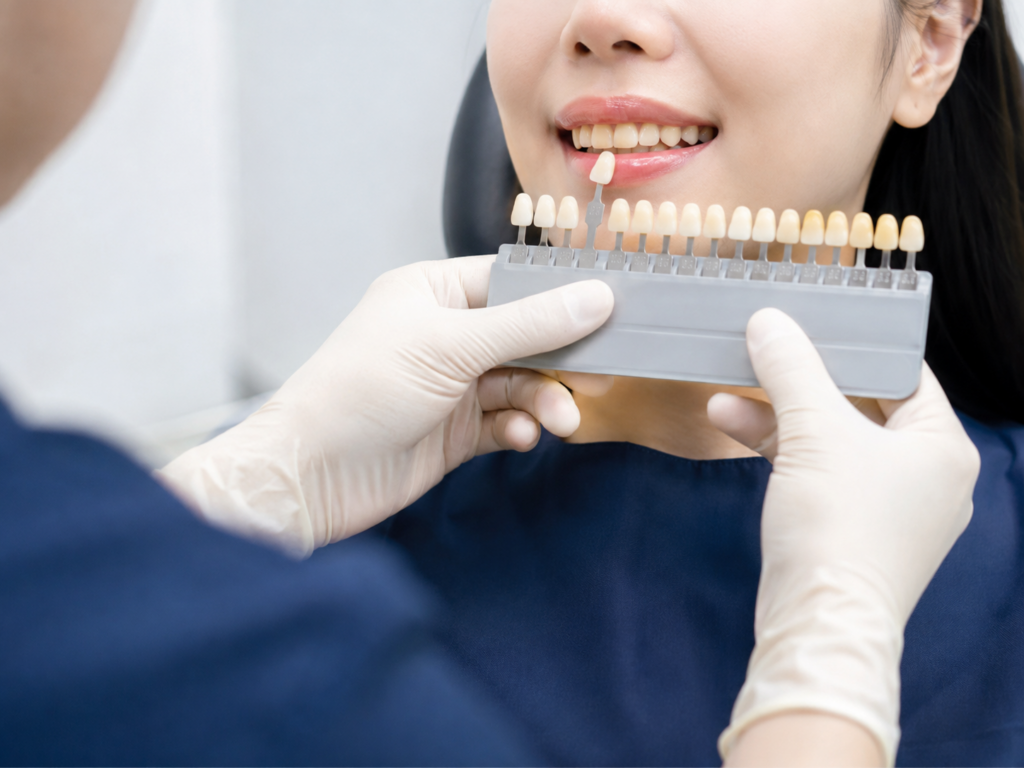
치아미백은 ‘치아 색’을 밝게 하는 치료입니다
치아미백은 과산화수소 또는 과산화요소 계열의 미백 성분을 이용해 자연치의 색을 밝게 만드는 방법입니다. 커피나 차와 같은 음식으로 인한 착색뿐 아니라 일부 치아 내부 변색에도 활용될 수 있으며, 치아의 형태 자체를 바꾸지 않는다는 점이 특징입니다.
여기서 한 가지 정확히 짚어드릴 부분이 있습니다. 치아 착색은 크게 표면에 생기는 외인성 착색과, 법랑질 안쪽이나 상아질까지 영향을 미치는 내인성 착색으로 나뉘는데요. 미국치과의사협회(ADA)의 공식 안내에 따르면,
병원에서 시행하는 외부 미백 시술은 주로 법랑질 범위를 벗어나지 않는 외인성 착색이나 얕은 변색에 효과적이며,
상아질 안쪽까지 침투한 내인성 착색은 외부 미백만으로 완전히 제거하기가 어려운 것으로 설명됩니다.
그래서 저희도 미백 상담을 드릴 때 착색이 표면에 있는지, 치아 안쪽 색 자체가 문제인지를 먼저 구분해서 안내해드리는 편입니다.
따라서 치아 배열과 앞니 모양에는 큰 불만이 없으시고 “지금보다 치아 색만 조금 더 밝았으면 좋겠다”고 생각하신다면 먼저 미백을 고려해보실 수 있습니다. 다만 모든 치아가 같은 정도로 밝아지는 것은 아니며, 변색의 원인과 정도에 따라 미백 반응에는 개인차가 있을 수 있습니다.
또 한 가지 중요한 점이 있습니다. 미백은 자연치에 작용하기 때문에 기존에 치료한 레진, 크라운, 임플란트 보철물의 색까지 함께 밝아지는 것은 아닙니다. 앞니에 보철물이 있으시다면 미백 후 자연치와 색 차이가 생길 가능성도 함께 확인해보시는 것이 좋겠습니다.
미백 후 나타날 수 있는 대표적인 불편감은 일시적인 치아 민감도와 잇몸 자극입니다. ADA에서도 이러한 증상이 미백 시술 후 비교적 흔하게 나타나지만 대개는 일시적이라고 안내하며, 다만 권장 농도와 사용 시간을 지키지 않고 과도하게 사용할 경우 오히려 법랑질이나 잇몸이 손상될 수 있다고도 설명하고 있습니다.
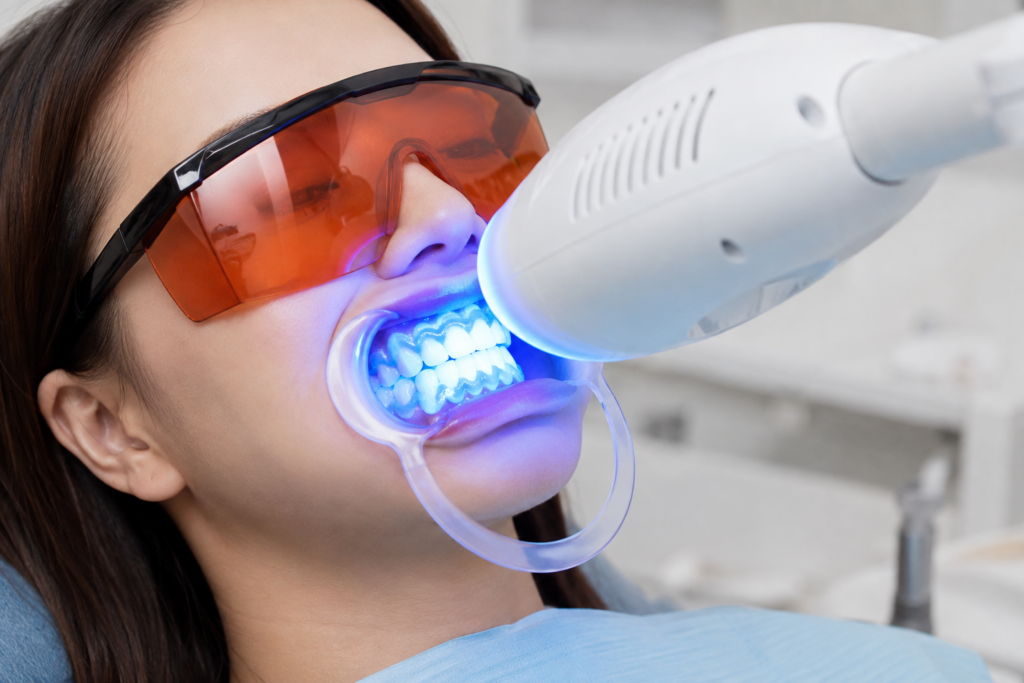
무삭제 라미네이트는 색뿐 아니라 ‘모양’까지 바꿀 수 있습니다
라미네이트는 치아의 앞면에 얇은 세라믹 등의 수복물을 접착해 보이는 색과 형태를 조정하는 치료입니다. 치아가 작거나 형태가 마음에 들지 않으시는 경우, 앞니 사이에 작은 틈이 있으시는 경우, 일부 치아 모양의 비대칭이 있으시는 경우처럼 색 이외의 문제까지 함께 개선하고자 하실 때 검토해볼 수 있는 방법입니다.
다만 이름 때문에 오해가 생기는 부분이 있어 꼭 말씀드리고 싶습니다. ‘무삭제 라미네이트’라는 이름 때문에 모든 경우에 치아를 전혀 건드리지 않고 붙일 수 있다고 생각하시는 분들이 많습니다. 하지만 실제 치료에서는 치아 위치와 크기, 돌출 정도, 교합, 원하시는 최종 형태 등에 따라 정말 삭제가 필요 없는 경우도 있고, 최소한의 치아 다듬기가 필요한 경우도 있습니다.
특히 이미 치아가 앞으로 돌출되어 있는 상태에서 공간을 고려하지 않고 라미네이트를 그대로 덧붙이면 치아가 지나치게 두껍거나 볼록해 보일 수 있습니다. 무삭제 라미네이트를 7년간 추적 관찰한 해외 연구에서도, 심한 변색이나 치아 모양 이상, 치아 위치가 많이 어긋난 경우처럼 재료를 덧붙이는 것만으로는 원하는 모양을 만들기 어려운 상황에서는 무삭제 방식이 적합하지 않을 수 있다고 설명하며, 라미네이트가 지나치게 두껍게 만들어질 경우 잇몸에 염증이 생기는 등 관리가 필요한 부분이 있다는 점도 함께 언급하고 있습니다.
2023년 발표된 기존 라미네이트와 무삭제·최소삭제 라미네이트를 비교한 체계적 문헌고찰(Cureus)에서도, 진짜 무삭제 방식에 대한 임상 연구 자체는 아직 많지 않다는 한계를 지적하면서도 심미성, 유지 기간, 치주 건강 측면에서 두 방식이 어떻게 다를 수 있는지를 정리한 바 있습니다.
그래서 저는 ‘무삭제’라는 단어보다, 실제 환자분의 치아에서 어느 정도의 삭제나 형태 조정이 필요한지, 그리고 왜 필요한지를 정확히 확인하시는 과정을 더 중요하게 생각합니다.
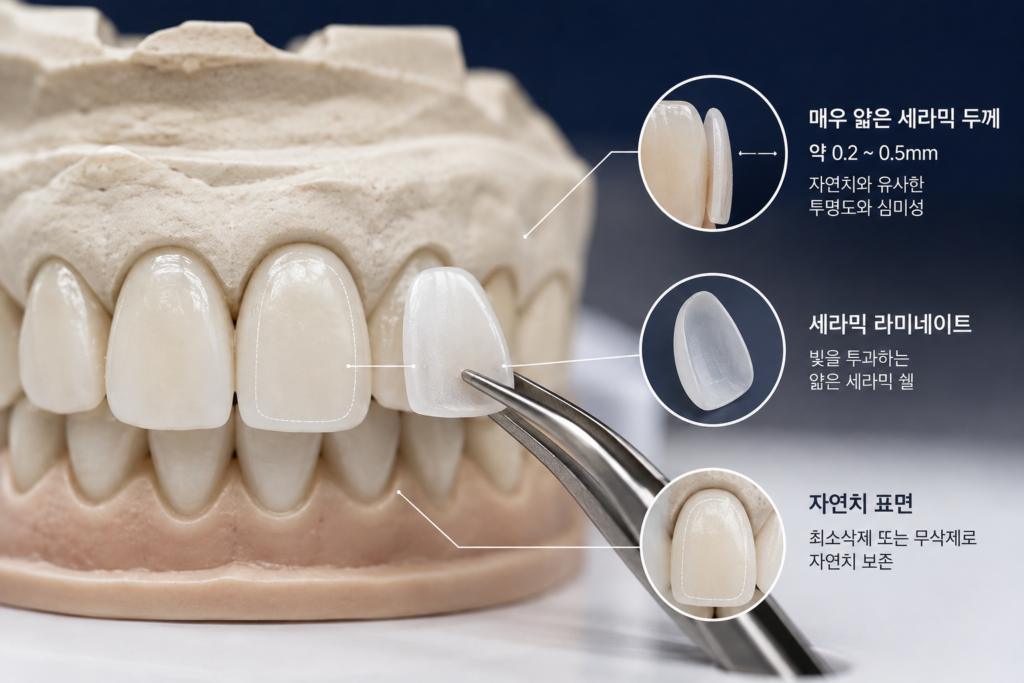
⬇️[03_무삭제라미네이트_단면구조이미지]
이런 경우라면 이런 치료를 고려해볼 수 있습니다
치아 배열이나 형태는 비교적 만족스러우신데 전체적으로 치아가 누렇게 보여 고민이시라면, 치아미백이 보다 보존적인 선택지가 될 수 있습니다. 특히 커피, 차 등으로 인한 착색이나 자연치의 색 자체가 고민이시라면 먼저 변색 원인을 확인한 뒤 미백 가능 여부를 살펴보시는 것이 좋겠습니다.
반대로 색뿐 아니라 아래와 같은 부분이 함께 신경 쓰이신다면 라미네이트를 포함한 심미수복 치료가 하나의 선택지가 될 수 있습니다.
- 앞니 크기가 작아 보이시는 경우
- 치아 모양이 좌우로 달라 보이시는 경우
- 앞니 사이의 작은 틈이 고민이신 경우
- 치아 끝부분의 형태를 변화시키고 싶으신 경우
- 미백만으로 개선하기 어려운 변색이 있으신 경우
다만 치아가 심하게 겹쳐 있으시거나 앞으로 많이 돌출되신 경우, 이갈이나 이 악물기 습관이 강하신 경우 등에는 단순히 ‘무삭제’ 방식만을 고집하기 어려울 수 있습니다. 이런 경우에는 교정 등 다른 치료와 비교해보는 과정이 필요할 수도 있습니다.
무삭제 라미네이트 vs 치아미백, 한눈에 비교하면?
| 구분 | 치아미백 | 무삭제·최소삭제 라미네이트 |
|---|---|---|
| 주된 목적 | 자연치 색상 개선 | 색상 + 형태 개선 |
| 치아 모양 변화 | 어려움 | 가능 |
| 작은 앞니·치아 틈 개선 | 어려움 | 경우에 따라 가능 |
| 자연치 삭제 | 일반적으로 필요 없음 | 상태에 따라 없거나 일부 필요 |
| 기존 크라운·레진 색 변화 | 밝아지지 않음 | 별도 치료계획 필요 |
| 대표적으로 고려할 점 | 일시적 시림, 잇몸 자극 | 파절·탈락, 교합, 삭제 여부 |
이 표만 보면 라미네이트가 더 많은 부분을 바꿀 수 있으니 더 좋은 치료처럼 느껴지실 수 있습니다. 하지만 바꿀 수 있는 것이 많다고 해서 반드시 더 좋은 치료라는 뜻은 아닙니다. 색깔만 고민이신 치아를 굳이 수복물로 덮으실 필요는 없는 경우도 있기 때문입니다. 반대로 치아 형태나 크기를 변화시키고 싶으신데 미백만 반복하신다고 해서 원하시는 결과를 얻으실 수 있는 것도 아닙니다.
무삭제 라미네이트 전, 이 부분을 함께 확인해보세요
라미네이트 치료에서 자연치 조직을 최대한 보존하는 것은 중요한 원칙 중 하나입니다. 특히 최근 발표된 2024년 국제 학술지 Journal of Prosthetic Dentistry의 체계적 문헌고찰 및 메타분석에서는, 법랑질에 접착된 세라믹 라미네이트의 생존율이 약 99%로 나타난 반면 상아질이나 기존 레진에 접착된 경우는 91~95% 수준으로 상대적으로 낮게 나타났습니다. 즉 단순히 보철물을 얇게 만드는 것뿐 아니라, 자연치의 법랑질을 얼마나 보존할 수 있는지가 장기적인 유지에 더 중요한 요인이라는 것을 보여줍니다.
그래서 무삭제 라미네이트를 알아보실 때는 이름만 확인하기보다 아래 네 가지를 함께 확인해보시는 것을 권해드립니다.
- 내 치아에서 실제 삭제가 필요한지
- 필요한 경우 어느 부위를, 왜 다듬는지
- 교합에는 문제가 없는지
- 원하시는 치아 모양이 과도하게 두꺼워지지는 않는지
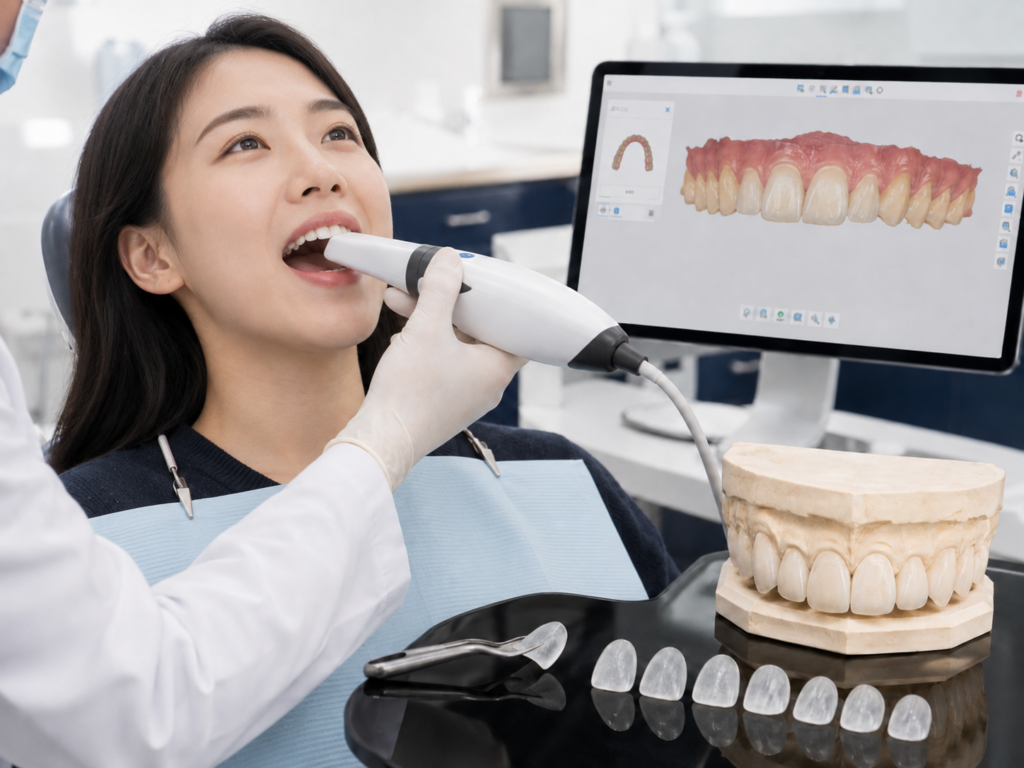
결국 무삭제 라미네이트 vs 치아미백을 고민하실 때 가장 먼저 정하셔야 하는 것은 치료 이름이 아니라 해결하고 싶으신 문제입니다. 치아 모양에는 큰 문제가 없으시고 색이 가장 큰 고민이시라면 치아미백부터 검토해보실 수 있습니다. 반대로 색뿐 아니라 앞니의 크기, 형태, 작은 공간 등을 함께 변화시키고 싶으시다면 라미네이트를 포함한 심미수복 치료를 비교해보실 수 있습니다.
무삭제 라미네이트 역시 모든 분께 치아 삭제 없이 적용할 수 있는 치료는 아니므로 ‘무삭제’라는 단어만으로 치료를 결정하지 않으시는 것이 좋겠습니다. 정확한 치료 방법은 구강검사와 개인의 치아 상태에 따라 달라질 수 있습니다.
자주 묻는 질문
Q. 치아가 누렇다면 라미네이트보다 미백이 먼저인가요?
치아의 모양과 배열에 큰 문제가 없으시고 색만 고민이시라면 보다 보존적인 방법인 치아미백을 먼저 검토해보실 수 있습니다. 다만 변색 원인에 따라 미백 반응이 다를 수 있으므로 사전 검사가 필요합니다.
Q. 무삭제 라미네이트는 정말 치아를 하나도 안 깎나요?
가능한 경우도 있지만 모든 치아에 적용되는 것은 아닙니다. 치아가 돌출되어 있거나 배열, 교합, 최종적으로 만들 치아의 두께에 따라 일부 치아 삭제가 필요할 수 있습니다.
Q. 무삭제 라미네이트를 하면 치아가 원하는 만큼 하얘질 수 있나요?
세라믹의 색과 투명도를 조절해 외관을 변화시킬 수 있지만, 기존 치아 색과 재료의 두께, 원하시는 자연스러움 등에 따라 한계가 있습니다. 지나치게 밝은 색보다 얼굴과 주변 치아에 어울리는 색을 계획하시는 것이 중요합니다.
Q. 크라운이나 레진이 있어도 치아미백을 할 수 있나요?
자연치는 미백될 수 있지만 기존 크라운이나 레진 같은 수복물은 같은 방식으로 밝아지지 않습니다. 따라서 앞니 수복물이 있으시다면 미백 후 색상 차이까지 고려해 치료계획을 세우셔야 합니다.
Q. 미백 후 다시 누렇게 될 수 있나요?
미백 결과는 영구적으로 고정되는 것은 아닙니다. 식습관과 커피·차·흡연 등의 착색 요인, 구강위생 상태 등에 따라 시간이 지나면서 색이 다시 변화할 수 있습니다.
English Summary
Patients often ask a similar question during consultations: “My teeth look yellow — would whitening be enough, or should I consider veneers instead?” On the surface, teeth whitening and no-prep (or minimal-prep) porcelain veneers can seem like similar cosmetic options, since both are aimed at creating a brighter, more attractive smile. In practice, though, the two treatments address different concerns, and understanding that difference is the first step toward choosing the right approach.
Teeth whitening works by using peroxide-based bleaching agents to lighten the natural shade of the tooth. It can address staining caused by coffee, tea, or similar foods, and in some cases can also improve certain types of internal discoloration, depending on the cause. Importantly, whitening does not change the shape, size, or alignment of the teeth — it is a color-only treatment. According to guidance from the American Dental Association, professional whitening tends to be most effective for extrinsic staining that sits at or near the enamel surface, while intrinsic staining that extends into the dentin layer is generally difficult to fully resolve with external whitening alone. This distinction is one we walk through with patients during consultation, since it directly affects how much improvement can realistically be expected.
It is also worth noting that whitening only affects natural tooth structure. Existing crowns, composite resin restorations, or implant restorations will not lighten along with the natural teeth. Patients with visible restorations on their front teeth should be aware that a color mismatch may become more noticeable after whitening, and this should be factored into treatment planning in advance.
Temporary tooth sensitivity and mild gum irritation are the most commonly reported side effects of whitening. These effects tend to be short-lived for most patients, though the degree can vary depending on individual tooth condition and the concentration or duration of the whitening protocol used. Following the recommended usage guidelines helps minimize these effects.
No-prep or minimal-prep veneers, by contrast, are designed to change both the color and the shape of the teeth. A thin layer of ceramic material is bonded to the front surface of the tooth, which allows for adjustments to size, proportion, and small gaps between teeth — changes that whitening alone cannot achieve. This makes veneers a relevant option for patients whose concerns go beyond color, such as slightly small anterior teeth, mild asymmetry between the left and right front teeth, small diastemas, or discoloration that does not respond well to whitening.
A point that deserves particular emphasis is that the term “no-prep” does not mean that tooth reduction is avoided in every case. Whether minimal reduction is required depends on several individual factors, including the current position of the tooth, its degree of protrusion, the bite relationship, and the final shape the patient hopes to achieve. When veneers are added without accounting for available space — particularly on teeth that are already somewhat protruded — the result can appear overly thick or bulky. A seven-year prospective study following patients treated with no-prep veneers reported that this approach may not be well suited to cases involving significant discoloration, irregular tooth shape, or teeth that are noticeably out of position, since these situations often cannot be corrected by simply adding material to the tooth surface. The same study also noted that veneers made excessively thick can be associated with gum inflammation, underscoring the importance of appropriate case selection.
A 2023 systematic review published in Cureus, comparing conventional veneers with minimal- and no-prep approaches, similarly pointed out that the body of clinical research specifically on true no-prep veneers remains relatively limited. Even so, the review outlined meaningful differences between the approaches in terms of esthetic outcomes, longevity, and periodontal health, reinforcing that “no-prep” is not a single uniform technique but rather a spectrum of approaches that should be matched to the individual case.
For patients weighing which option might be more appropriate, a helpful starting point is to consider what specifically is bothering them. If the teeth are reasonably well-aligned and shaped, and the main concern is that they “look yellow in photos,” starting with an evaluation for whitening is often a reasonable first step, since a successful outcome may resolve the concern without additional restorative treatment. On the other hand, if concerns extend to small gaps between the front teeth, congenitally small teeth, chipped or worn edges, size discrepancies between the left and right teeth, or discoloration that whitening is unlikely to fully correct, then veneers or a related restorative approach may be worth discussing.
Long-term durability is another important consideration, and it is closely tied to the amount of enamel preserved during preparation. A 2024 systematic review and meta-analysis published in the Journal of Prosthetic Dentistry found that ceramic veneers bonded predominantly to enamel had a survival rate of approximately 99%, compared with roughly 91–95% for veneers bonded to dentin or existing composite. This finding suggests that preserving enamel — rather than simply minimizing visible tooth reduction — is a key factor in how long a veneer is likely to last. Before proceeding with no-prep veneers, patients may find it useful to confirm several things with their dentist: whether any reduction is actually necessary for their specific teeth, which areas would be adjusted and why, whether the bite relationship has been evaluated, and whether the planned shape risks appearing overly thick.
Ultimately, the choice between whitening and no-prep veneers should be guided less by the name of the procedure and more by the specific problem a patient wants to solve. If tooth shape is not a major concern and color is the primary issue, whitening is often the more conservative starting point. If color, size, shape, and spacing are all factors, a restorative option such as veneers may be more appropriate to evaluate. Because no-prep veneers are not universally appropriate for every patient regardless of case, the term “no-prep” alone should not be the deciding factor in treatment selection.
As with any cosmetic dental treatment, individual results vary depending on each patient’s tooth structure, gum condition, bite, and existing restorations. An accurate treatment recommendation requires an in-person oral examination and discussion with a qualified dentist, and this summary is intended for general educational purposes rather than as a substitute for professional evaluation.
마치며
치아 색이나 모양 때문에 고민이 있으시다면, 무엇을 가장 바꾸고 싶으신지부터 정리해보시는 것이 치료 선택의 첫걸음이 될 수 있습니다. 명일동, 강동구에서 앞니 심미치료를 알아보고 계시다면 치아와 잇몸 상태, 기존 레진·크라운 여부, 교합, 변색의 원인을 먼저 확인하신 뒤 가능하면 자연치를 보존하면서 원하시는 변화를 얻을 수 있는 방법이 무엇인지 비교해보시길 권해드립니다.
관련해서 [※내부링크: 치아미백 관련 기존 글의 실제 URL로 교체 필요] 함께 확인해보시면 도움이 되실 것 같습니다.
지금까지 서울더자연치과 치과의사 김민수였습니다.
※ 이 글은 의료법 제56조에 따른 의료광고 관련 규정을 준수하여 작성되었으며, 특정 치료의 효과를 보장하지 않습니다. 모든 치료 결과는 개인의 구강 상태에 따라 차이가 있을 수 있으며, 정확한 진단과 치료 계획은 반드시 전문의와의 상담을 통해 결정하시기 바랍니다.
#무삭제라미네이트 #치아미백 #라미네이트 #앞니라미네이트 #라미네이트장단점 #치아미백효과 #누런치아 #앞니심미치료 #강동구치과 #명일동치과