
수면(의식하진정법) 임플란트란? 다수 치아 상실 사례로 설명드립니다
수면 임플란트는 수면내시경과 유사한 진정 방식으로 긴장과 통증을 완화한 상태에서 임플란트를 심는 방법입니다. 다수 치아 상실과 정출·충치가 함께 있던 분을, 수면 진정하에 발치와 식립을 동시에 진행한 사례로 설명드립니다.
안녕하세요, 강동구 명일동에 위치한 서울더자연치과 치과의사 김민수입니다. 오늘은 수면(의식하진정법) 임플란트에 대해 실제 사례 사진과 함께 설명드리겠습니다. 강동구 임플란트 상담에서도 치료가 두렵거나 심을 개수가 많을 때 자주 문의를 받는 주제입니다.
수면(의식하진정법) 임플란트는 흔히 받으시는 수면내시경과 동일한 방식의 수면 마취를 통해 가수면 상태를 유도한 뒤, 통증과 불편함을 완화한 상태에서 임플란트를 심는 것을 뜻합니다. 전신마취에 비해 부담이 적은 과정으로 통증·불편함을 줄일 수 있다는 이점이 있습니다. 의식이 아예 없는 것이 아니라 어느 정도 대화가 가능한 상태에서 진행하기 때문에, 기저질환이 있거나 치과 트라우마가 심한 분들에게 도움이 될 수 있는 방법입니다.
초진 때 어떤 상태였나요?
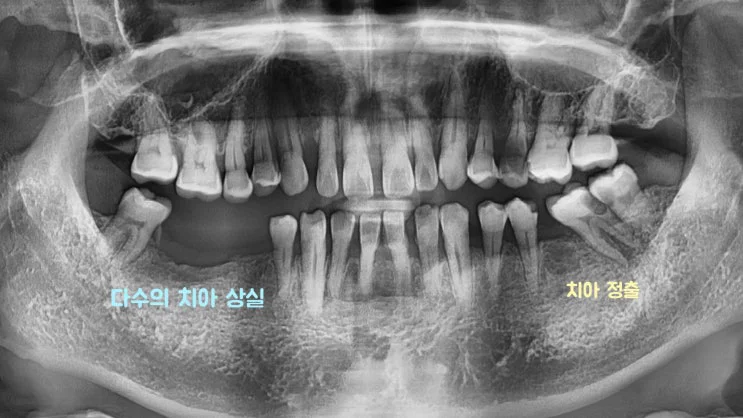
초진 파노라마를 보면 다수의 치아 상실이 구강 곳곳에 나타나 있고, 한쪽에는 맞물릴 치아가 없어 정출(치아가 솟아오르는 현상)된 부위가 관찰됩니다. 심한 치석과 충치는 물론, 이미 깨져 있는 치아, 정출되어 위치가 변형된 곳까지 복합적인 문제가 함께 나타나 있었습니다.
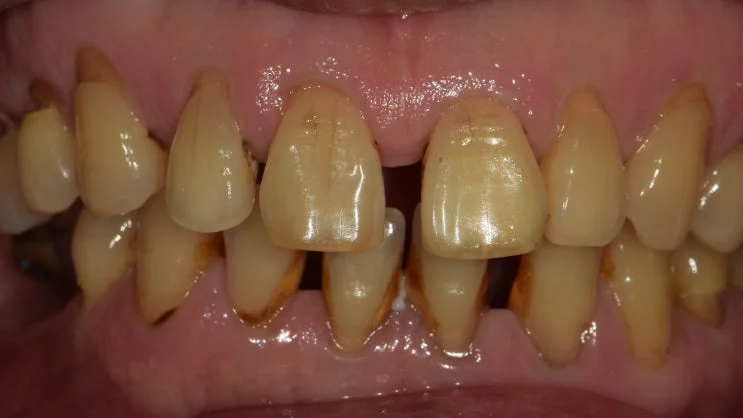
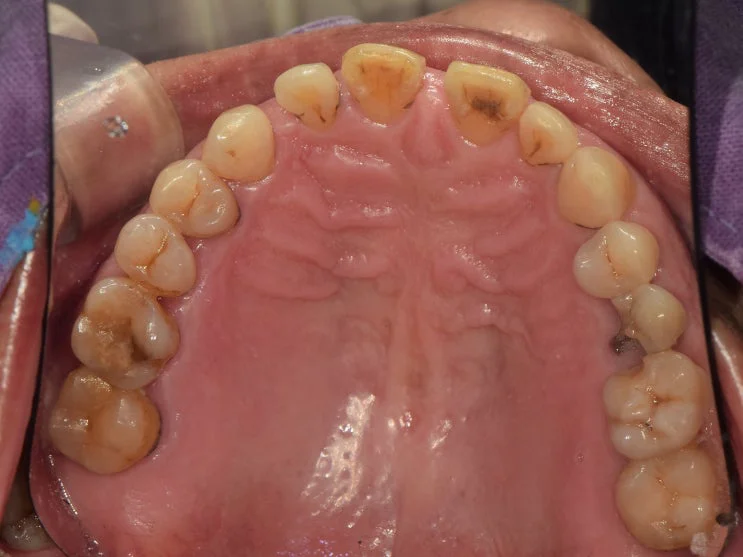
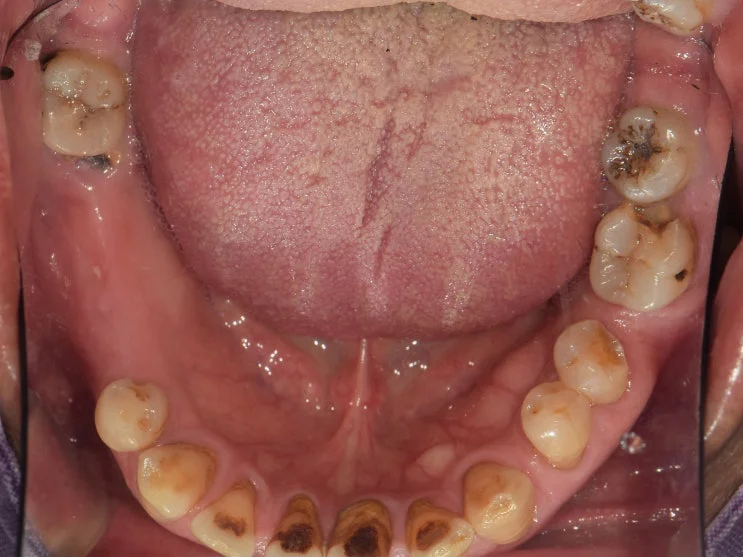
구내 사진에서도 다수의 상실과 변색, 충치, 정출이 함께 확인됩니다. 이렇게 여러 문제가 겹쳐 있으면 단순히 한두 개의 치아만 보는 것이 아니라, 발치가 필요한 치아와 살릴 치아를 구분하고 전체적인 저작 기능 회복까지 함께 계획해야 합니다.
왜 수면(의식하진정법)으로 진행했나요?
이 사례는 여러 개의 치아를 발치하고 다수의 임플란트를 함께 심어야 하는 상황이었습니다. 관찰 결과, 수면내시경과 동일한 약물과 방식을 이용하는 수면 마취(의식하진정법)를 통해 임플란트를 식립하는 것이 좋겠다고 판단했습니다.
구체적으로는 3개의 치아를 발치한 뒤 6개의 픽스처를 식립하며, 이때 발치와 식립을 동시에 진행하는 계획을 세웠습니다. 발치와 다수 식립을 한 번에 진행하면 시술 시간이 다소 길어질 수 있는데, 수면 진정을 병행하면 시술 중의 긴장과 시간에 대한 부담을 줄이는 데 도움이 될 수 있습니다.
다만 수면 진정이 모든 분께 항상 필요한 것은 아니며, 전신 건강 상태와 복용 약물, 시술 범위 등을 함께 고려해 적용 여부를 판단합니다. 진정 상태에서도 활력징후를 지속적으로 관찰하며 안전에 유의해 진행합니다.
수술은 어떻게 진행되나요?
먼저 수면 마취(의식하진정법)를 통해 가수면 상태를 유도합니다. 이후 계획한 대로 3곳을 발치한 뒤 6곳에 픽스처를 식립합니다. 식립 후에는 정해진 위치에 알맞게 심어졌는지, 고정력에 문제는 없는지 파노라마 등으로 꼼꼼하게 확인합니다.
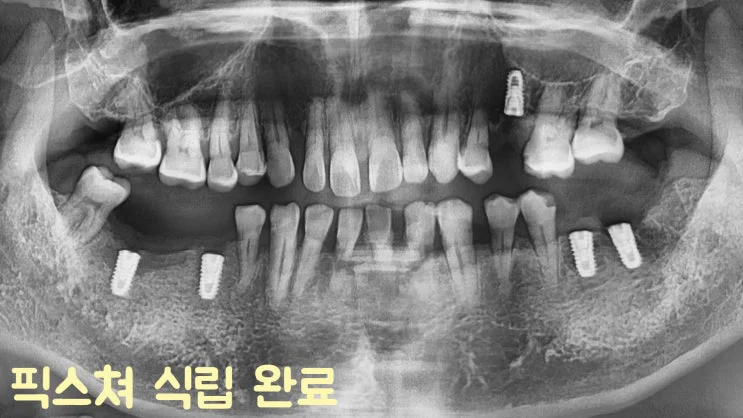
식립 후에는 약 3개월 정도의 회복 기간을 거치며, 크라운을 올릴 수 있을 만큼 안정도가 확보되는지 확인합니다. 골융합(뼈와 임플란트가 붙는 과정)이 충분히 이뤄지고 고정력이 확인되면 최종 보철 단계로 넘어갑니다. 수면 임플란트를 통한 강동구 임플란트에서도 다수 식립의 경우 이 회복·확인 과정을 특히 꼼꼼하게 진행합니다. 다만 회복 기간과 안정도는 개인의 뼈 상태와 전신 조건에 따라 달라질 수 있습니다.
최종 보철 후 어떻게 달라졌나요?
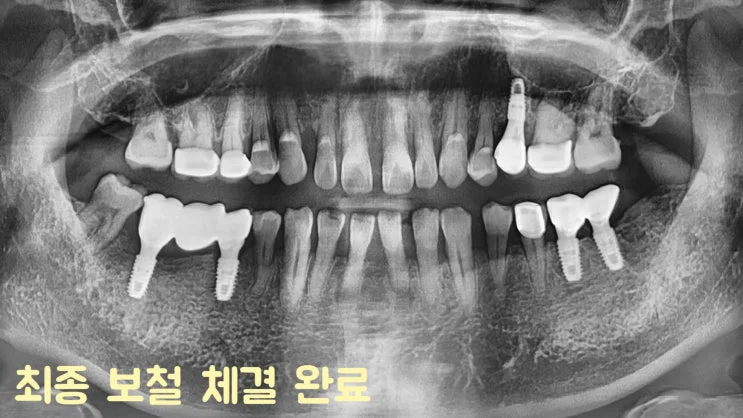
안정도가 확인된 뒤 지르코니아와 PFM 크라운을 제작해 최종 보철을 완성했습니다. 파노라마에서 식립된 임플란트 위로 보철이 올라간 모습을 확인할 수 있습니다.
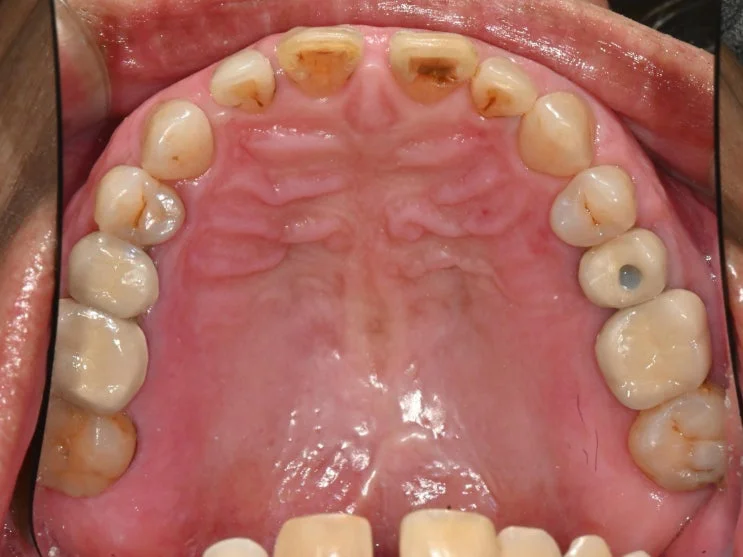
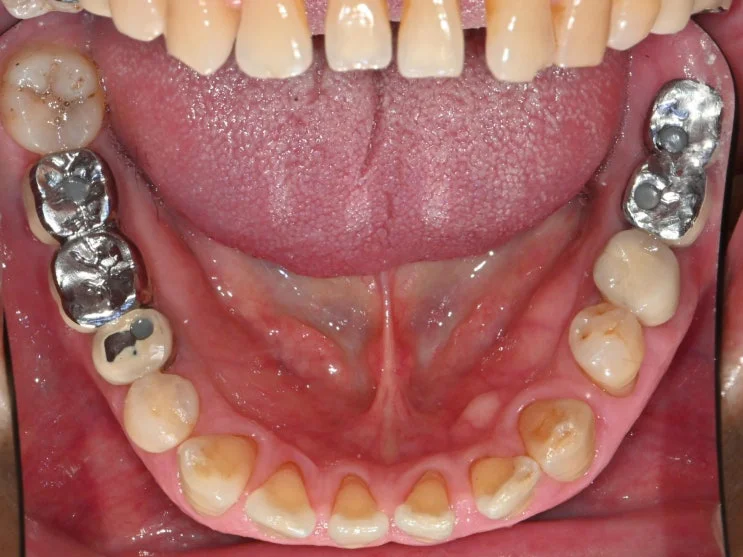
수면 임플란트를 통해 구내 사진에서도 비어 있던 자리가 보철로 채워지고, 정출·충치로 흐트러졌던 부위가 정리되어 위아래 치아가 맞물리는 저작 기능과 형태를 회복한 것을 확인할 수 있습니다.
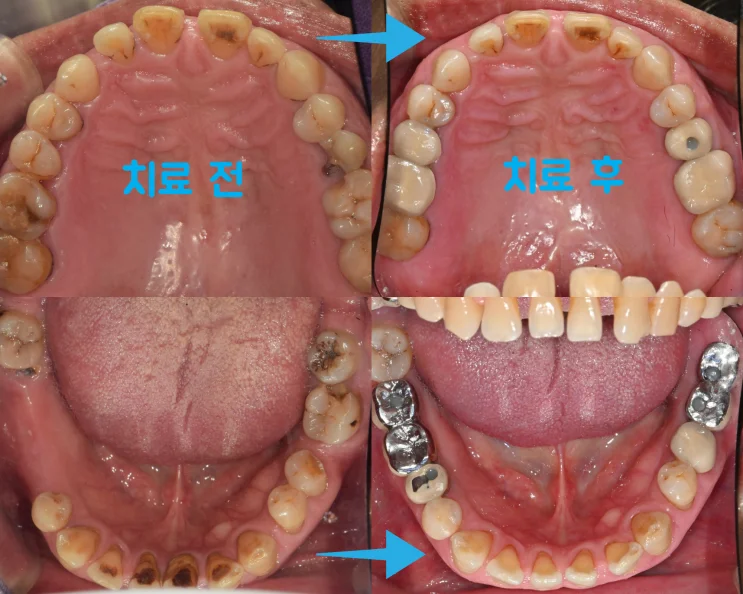
치료 전과 후를 비교해 보면, 다수 상실·정출·충치로 복합적인 문제가 있던 구강이 발치와 임플란트, 보철을 통해 정리된 것을 볼 수 있습니다. 이렇게 문제가 여러 곳에 겹쳐 있는 경우에도 계획적인 접근을 통해 기능과 형태를 함께 재건할 수 있습니다.
수면 임플란트, 어떤 분께 도움이 될 수 있나요?
수면 임플란트는 치과 치료에 대한 두려움이 크신 분, 여러 개의 임플란트를 한 번에 심어야 하는 경우, 고령이거나 기저질환이 있는 분 등에게 도움이 될 수 있습니다. 이 사례처럼 발치와 다수 임플란트 식립을 함께 진행할 때 시술 부담을 줄이는 데 활용되기도 합니다.
다만 수면 진정은 전신 건강 상태와 복용 약물 등에 따라 적용이 제한될 수 있으므로, 사전 상담과 평가가 중요합니다. 모든 분께 항상 필요한 것은 아니며, 상태에 맞는 방법을 선택하는 것이 좋습니다. 강동구 임플란트 상담에서도 수면 진정 여부는 전신 상태를 먼저 확인한 뒤 결정한다고 안내드립니다.
발치와 임플란트를 동시에 하면 좋은 점이 있나요?
발치와 식립을 동시에 진행하면 수술 횟수와 전체 치료 기간을 줄이는 데 도움이 될 수 있고, 수면 진정을 병행하는 경우 한 번의 진정으로 여러 과정을 진행할 수 있다는 장점이 있습니다. 다만 발치할 치아의 상태와 염증 여부, 잇몸뼈 조건에 따라 동시 진행이 적합한 경우와 발치 후 회복을 기다렸다가 식립하는 것이 나은 경우가 나뉩니다.
따라서 동시 진행 여부는 정밀 진단을 통해 결정하며, 강동구 임플란트 계획에서도 개인의 구강 상태에 맞춰 순서와 시점을 조정합니다.
자주 묻는 질문
Q. 수면 임플란트는 완전히 잠드나요?
전신마취처럼 완전히 잠드는 것과는 다릅니다. 수면내시경과 유사한 진정 방식으로 긴장과 불안을 낮추고 편안한 상태를 유도하며, 어느 정도 대화가 가능한 상태로 진행됩니다. 자발 호흡은 유지됩니다.
Q. 발치와 임플란트를 같은 날 하나요?
상태에 따라 다릅니다. 이 사례처럼 발치 후 곧바로 식립하는 경우도 있고, 잇몸뼈나 염증 상태에 따라 발치 후 회복을 기다렸다가 식립하는 경우도 있습니다. 순서와 시점은 진단을 통해 결정됩니다.
Q. 식립 후 바로 크라운을 올리나요?
아닙니다. 픽스처를 심은 뒤 약 3개월간 회복하며 골융합과 안정도를 확인한 후 최종 보철을 진행합니다. 기간은 개인의 뼈 상태에 따라 달라질 수 있습니다.
Q. 기저질환이 있어도 수면 진정이 가능한가요?
전신 건강 상태와 복용 약물에 따라 적용 여부가 달라집니다. 사전 상담과 평가를 통해 안전하게 진행할 수 있는지 확인한 뒤 결정합니다.
Q. 지르코니아와 PFM 크라운은 어떻게 다른가요?
재료와 특성에 차이가 있어 부위와 상태에 맞게 선택합니다. 이 사례에서는 부위별로 지르코니아와 PFM 크라운을 함께 활용해 보철을 완성했습니다.
English Summary
What Is Sedation (Conscious Sedation) Implant Treatment? Explained Through a Multiple-Tooth-Loss Case
Sedation, or conscious sedation, implant treatment means placing implants after inducing a light sleep-like state with the same kind of sedation used for sedated endoscopy, so that tension and discomfort are reduced during the procedure. Compared with general anesthesia it is a less burdensome process that can lessen pain and discomfort, and because the patient is not fully unconscious but remains able to communicate to some degree, it can help people who have underlying conditions or significant dental anxiety.
This post explains the approach through a real case of a patient who had multiple missing teeth along with over-eruption, heavy calculus, and decay.
On the first-visit panoramic image, teeth were missing throughout the mouth, and on one side a tooth had over-erupted because it had nothing to bite against. Along with this, there was heavy calculus and decay, already-fractured teeth, and areas whose position had shifted from over-eruption, so several problems overlapped at once.
The intraoral photographs showed the same combination of missing teeth, discoloration, decay, and over-eruption. When this many problems coexist, the plan cannot look at just one or two teeth; it has to distinguish which teeth need extraction from which can be preserved and plan for recovery of overall chewing function.
Because several teeth needed to be extracted while multiple implants were placed, the case was judged suitable for conscious sedation using the same medication and method as sedated endoscopy. Specifically, the plan was to extract three teeth and place six fixtures, carrying out the extractions and placement at the same time.
When extractions and multiple placements are done together the procedure can run somewhat long, and pairing it with sedation can help reduce the tension during surgery and the burden of the time involved. Sedation is not always necessary for everyone, however, and whether it is used is judged together with the patient’s general health, medications, and the scope of the procedure, with vital signs continuously monitored throughout for safety.
For the procedure itself, a light sleep-like state is induced first with conscious sedation, then three sites are extracted and six fixtures are placed, after which it is carefully confirmed with imaging that each implant is seated in the planned position and that fixation is sound. A recovery period of about three months follows, during which it is checked whether the stability is sufficient to place crowns; once osseointegration, the process in which bone bonds to the implant, is adequate and fixation is confirmed, treatment moves to the final restoration, though the recovery period and stability vary with each person’s bone condition and general health.
After stability was confirmed, the final restorations were completed using zirconia and PFM crowns, and the panoramic image shows the restorations seated over the placed implants. The intraoral photographs show the previously empty spaces filled with restorations and the areas disrupted by over-eruption and decay tidied up, restoring the chewing function and form of the upper and lower teeth meeting together. Comparing before and after, a mouth that had overlapping problems of multiple loss, over-eruption, and decay was reorganized through extraction, implants, and restorations, showing that even when problems overlap in several areas, function and form can be rebuilt together through a planned approach.
Sedation can help those with strong dental fear, those who need several implants placed at once, and older patients or those with underlying conditions; it is not always required, and the right choice depends on the individual, so it should be decided after prior consultation and evaluation. At Seoul The Nature Dental Clinic in Gangdong-gu, Myeongil-dong, whether to use sedation is decided after first checking the patient’s general condition.
A few practical points are worth adding for anyone weighing this option. Doing the extractions and the implant placements together in one sedation session can reduce the number of separate surgeries and the overall treatment time, and it means the patient goes through the anxious part of the experience once rather than repeatedly. Whether same-day extraction and placement suits a given tooth still depends on the condition of that tooth, whether inflammation is present, and the state of the surrounding bone, so in some cases it is better to extract first, allow healing, and place the implant later. This is a judgment made from the diagnosis rather than a fixed rule.
It is also important to understand that conscious sedation is a comfort and safety aid layered on top of the implant treatment, not a shortcut that changes the underlying biology: the bone still needs its healing time, the fixtures still need to integrate, and the final restoration still waits until stability is confirmed. What sedation changes is the patient’s experience during the longer or more complex surgical steps, which for someone with strong dental fear or several implants to place can be the difference between proceeding with care and avoiding treatment altogether.
Because the medication and monitoring involved interact with a person’s overall health, the pre-procedure evaluation of general condition and current medications is the part that determines whether this path is appropriate, and it should never be skipped.
마치며
다수의 치아 상실에 정출·충치까지 복합적으로 나타난 경우에도, 발치와 다수 임플란트 식립을 계획적으로 진행하면 저작 기능과 형태를 재건할 수 있습니다. 이 사례처럼 시술 범위가 넓거나 치료에 대한 부담이 큰 경우, 수면(의식하진정법)을 병행하면 시술 중의 긴장과 부담을 줄이는 데 도움이 될 수 있습니다.
다만 수면 진정과 임플란트 모두 전신 상태와 잇몸뼈 조건에 따라 적용 여부와 계획이 달라지므로, 정확한 판단은 검사와 상담을 통해 이루어져야 합니다. 수면 임플란트와 다수 임플란트에 대한 더 자세한 내용은 아래 가이드도 함께 참고하실 수 있습니다.
강동구, 명일동에서 치과 치료에 대한 두려움, 다수 치아 상실, 수면 임플란트를 고민하고 계신다면, 무리하지 마시고 먼저 진료를 통해 본인의 구강과 전신 상태를 정확히 확인해 보시길 권해 드립니다. 지금까지 서울더자연치과 치과의사 김민수였습니다.
※ 본 포스팅은 의료법 제56조 제1항의 의료광고 규정을 준수하여 작성되었으며, 실제 내원 환자분의 동의하에 공개된 사진입니다. 개인에 따라 진료 및 치료 방법, 효과와 부작용이 다르게 나타날 수 있으며, 진료 전 전문 의료진과의 충분한 상담을 권해 드립니다.