
네비게이션 임플란트로 오래된 틀니 대신 상악 다수 치아 재건
치아가 거의 남지 않은 상악을 8개의 임플란트로 재건한 실제 사례입니다. 다수 식립에 왜 네비게이션 방식이 적합한지 사진과 함께 설명드립니다.
안녕하세요, 강동구 임플란트 전문 치과서울더자연치과 치과의사 김민수입니다.
오늘은 네비게이션 임플란트 케이스에서 대해서 알아보도록 하겠습니다
오래된 틀니는 생각보다 많은 불편함을 초래할 수 있습니다. 구강에 고정되지 않고 뺐다 꼈다 하는 가철성 장치이다 보니, 치조골이 퇴축됨에 따라 들썩거리거나 흔들림이 나타나고, 예상치 못하게 잇몸을 짓눌러 통증이나 염증을 유발할 수 있습니다.
또한 플라스틱 재질로 만들어져 관리를 철저히 하지 않으면 쉽게 파손될 수 있습니다. 오늘은 오래된 틀니를 네비게이션 임플란트로 교체하는 과정을 실제 사례와 함께 정리해 드리겠습니다.
초기 상태는 어땠나요
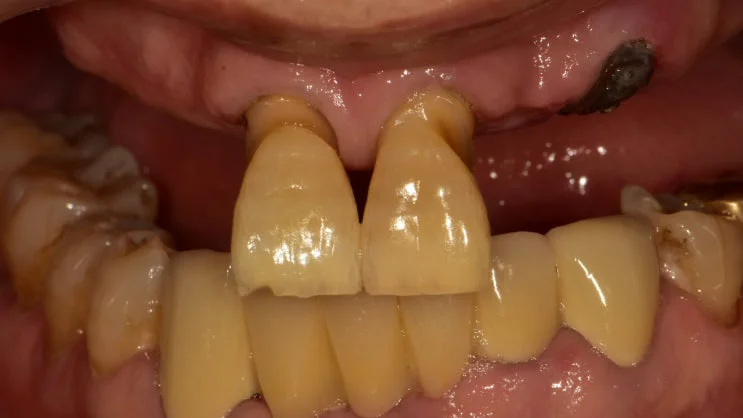
내원 당시 구내 사진을 보면, 상악에는 단 2개의 치아만 남아 있는 것으로 보이며 그중 한 곳은 뿌리만 남아 있는 상태로 확인됩니다.
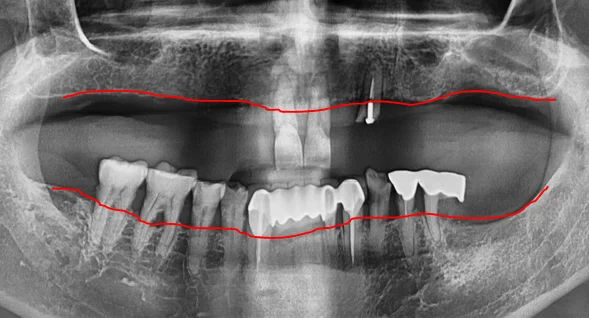
파노라마 엑스레이에서는 전체적인 치조골 소실이 심해 보이며, 하악 치아들에도 염증 소견이 나타나 전반적인 상황이 좋지 않아 보입니다. 이런 상태에서는 어느 부위부터 어떤 순서로 치료할지 계획을 세우는 것이 중요합니다.
따라서 이 사례에서는 우선 위쪽(상악) 치아들 치료부터 시작한 뒤, 아래쪽은 천천히 개선 계획을 수립하는 것이 좋겠다고 판단했습니다.
왜 네비게이션 임플란트가 적합한가요
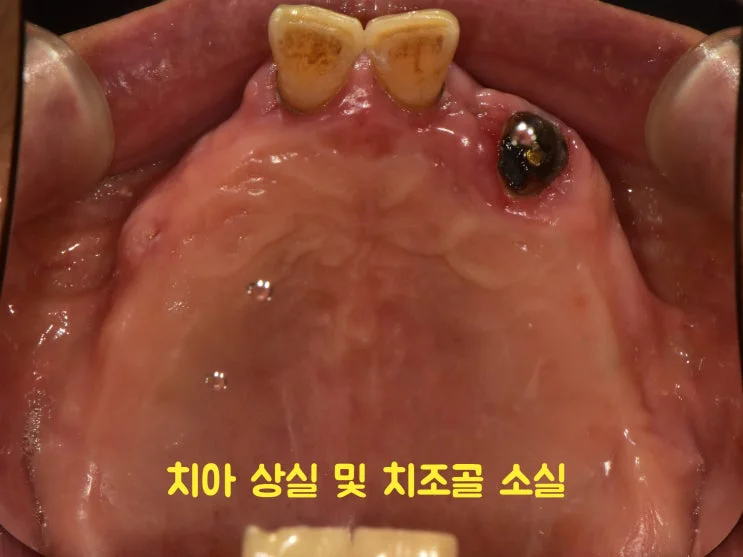
교합면에서 보면 상악의 치아 상실과 치조골 소실이 뚜렷하게 확인됩니다. 이 사례에서는 남아 있는 앞니 2개를 제외하고, 총 8개의 임플란트를 이용하여 상악을 재건하는 계획이 필요하다고 보았습니다.
8개 임플란트는 다수의 식립에 속하기에, 네비게이션 방식의 수술을 진행하는 것이 좋겠다고 판단했습니다. 네비게이션 임플란트는 3차원 영상 사진과 컴퓨터 분석을 통해 식립 방향과 위치, 픽스처의 종류, 그리고 주요 조직과의 위치를 고려하여 수술 전에 식립할 위치를 미리 정하는 방식입니다.
그 후 가이드를 미리 제작하여 수술 시 계획한 위치에 식립할 수 있게 되어, 보다 정확하고 안전한 수술을 지향할 수 있습니다. 또한 여러 개를 식립할 때 수술 시간이 줄어드는 데에도 도움이 될 수 있습니다.
식립부터 최종 보철까지 어떻게 진행되나요
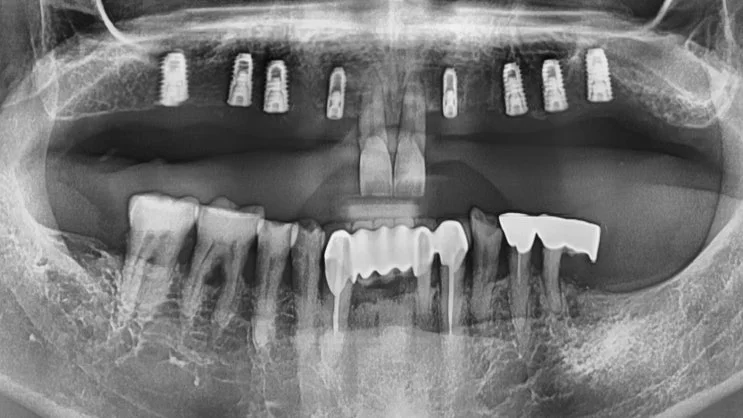
진행 과정을 설명드리자면, 먼저 컴퓨터 분석을 진행한 뒤 계획한 위치에 임플란트를 식립합니다. 식립 후 파노라마에서 상악에 여러 개의 임플란트가 자리 잡은 모습을 확인할 수 있습니다.
이후 골 유착과 고정도를 확인한 뒤 최종 크라운을 올릴 수 있습니다. 평균적으로 약 3개월 정도의 회복 기간을 가진 뒤 최종 보철 제작에 들어가게 됩니다. 다만 회복 기간은 개인의 뼈 상태와 전신 조건에 따라 달라질 수 있습니다.
치료 후
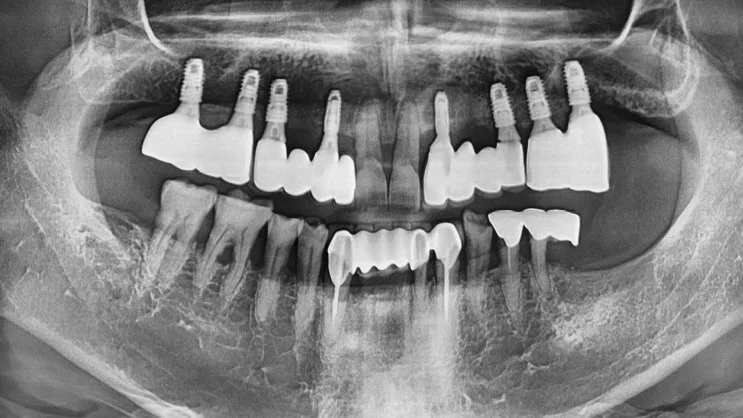
최종 보철 후 파노라마를 보면, 텅 비어 있던 윗니가 빈틈없이 단단한 보철로 채워진 것을 확인할 수 있습니다.
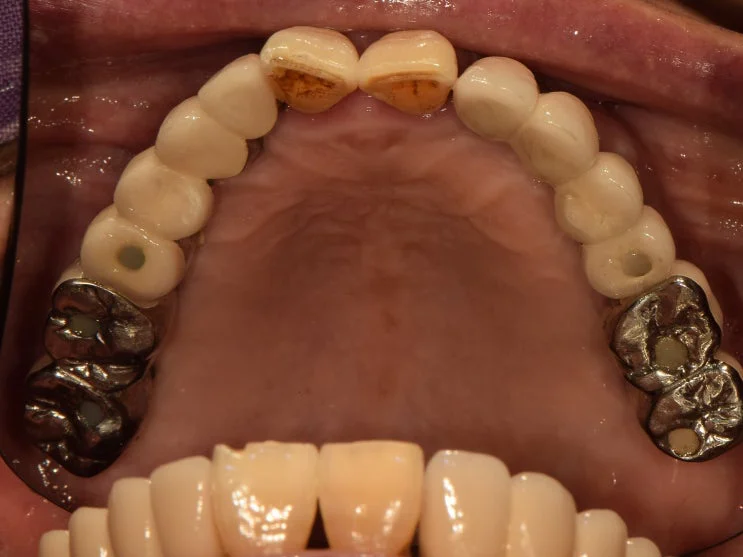
교합면에서 보아도 상악 전체가 고르게 보철로 재건되어, 이전의 불편했던 상태와는 크게 달라진 모습입니다. 이렇게 다수의 치아를 상실한 경우에도 계획적인 접근을 통해 상악 재건이 가능합니다.
자주 묻는 질문
Q. 네비게이션 임플란트는 일반 임플란트와 무엇이 다른가요?
네비게이션 임플란트는 3차원 CT 영상과 컴퓨터 분석을 바탕으로 식립 위치와 방향을 미리 계획하고, 제작한 가이드를 사용해 계획한 위치에 식립하는 방식입니다. 특히 여러 개를 식립하는 경우 정확성과 안전성을 지향하는 데 도움이 될 수 있습니다.
Q. 치아가 거의 없어도 임플란트가 가능한가요?
남은 치아가 적더라도 잇몸뼈 상태에 따라 여러 개의 임플란트로 재건하는 것이 가능한 경우가 있습니다. 다만 치조골 소실이 심한 경우에는 뼈이식 등이 함께 필요할 수 있어, 정밀 진단 후 계획을 세우는 것이 중요합니다.
Q. 상악 전체를 한 번에 치료하나요?
전체 상태에 따라 다릅니다. 이 사례처럼 상악 치료를 먼저 진행한 뒤 하악은 이후에 계획하는 등, 우선순위를 두고 단계적으로 접근하는 경우가 있습니다. 순서는 진단을 통해 결정됩니다.
Q. 식립 후 바로 최종 보철을 하나요?
그렇지 않습니다. 임플란트가 뼈와 유착되고 고정도가 확인되어야 최종 보철을 올릴 수 있습니다. 평균적으로 약 3개월 정도의 회복 기간을 두는 경우가 많지만, 개인차가 있습니다.
Q. 오래된 틀니를 임플란트로 꼭 바꿔야 하나요?
반드시 그런 것은 아니며 개인의 상태와 선택에 따라 다릅니다. 다만 틀니가 흔들리거나 잇몸을 눌러 통증·염증을 유발하는 경우, 임플란트 재건이 하나의 대안이 될 수 있습니다. 상담을 통해 본인에게 맞는 방법을 확인하시는 것이 좋습니다.
English Summary
Full Upper Arch Reconstruction Using Navigation-Guided Implants
An old removable denture can cause more discomfort than expected. Because it is not fixed to the mouth and is taken in and out, it tends to loosen and rock as the alveolar bone recedes over time, and it can press unexpectedly on the gums, causing pain or inflammation. Being made of plastic, it can also break relatively easily if not carefully maintained. This case describes replacing that situation with a navigation-guided implant reconstruction of the upper jaw.
At the initial visit, the upper jaw retained only two teeth, one of which had been reduced to little more than a root. The panoramic radiograph showed significant overall loss of alveolar bone, and the lower teeth showed signs of inflammation as well, so the general situation was unfavorable. Given this, the plan was to begin with treatment of the upper teeth first and to plan improvement of the lower arch gradually afterward, setting priorities rather than attempting everything at once.
Viewed from the occlusal surface, the tooth loss and bone loss in the upper jaw were clearly evident. Aside from the two remaining front teeth, the plan called for reconstructing the upper arch using a total of eight implants. Because placing eight implants falls into the category of multiple placement, a navigation-guided surgical approach was considered appropriate. Navigation implant surgery uses three-dimensional imaging and computer analysis to determine the direction and position of placement, the type of fixture, and the relationship to important anatomical structures, all planned before surgery.
A surgical guide is then fabricated in advance so that the implants can be placed at the pre-planned positions during surgery. This supports a more accurate and safer procedure and can also help reduce the operating time when several implants are placed together. In practice, the process begins with the computer analysis, followed by placement of the implants at the planned positions. The post-placement panoramic image confirmed that multiple implants had been positioned in the upper jaw.
After placement, the treatment waits for osseointegration and confirmation of stability before the final crowns are attached. On average, a healing period of about three months is allowed before the final prosthesis is fabricated, though this period varies with the individual’s bone condition and general health. Once the final restoration was completed, the panoramic image showed that the previously empty upper jaw had been filled completely with a solid, fixed prosthesis, and the occlusal view showed the upper arch evenly reconstructed.
This case illustrates that even when many teeth have been lost, a planned, staged approach can make upper-arch reconstruction possible. Navigation-guided placement is one tool that supports accuracy and safety in multiple-implant cases, but it is not a universal solution; the degree of bone loss, the need for grafting, and the overall oral condition all influence the plan.
It helps to understand why a guided approach is particularly valuable when several implants are involved. Each implant must be placed at an appropriate depth and angle, and the implants must also relate correctly to one another so that a single connected prosthesis can be fitted over them. When many fixtures are placed freehand, small deviations in angle can accumulate and make the final restoration more difficult to fabricate. By planning every position on a three-dimensional model beforehand and transferring that plan to the mouth through a fabricated guide, the surgery aims to keep each implant within the intended path, which is especially useful in a full-arch reconstruction like this one.
Careful planning also matters because of nearby anatomical structures. In the upper jaw, the maxillary sinus sits above the back teeth, and the available bone height can be limited after long-term tooth loss. Reviewing the sinus position and bone volume in advance allows the placement to be planned around these constraints, and in some situations procedures such as bone grafting or sinus augmentation may be considered as part of the overall plan. The staged sequence in this case, treating the upper jaw first and planning the lower jaw afterward, reflects the same principle of setting priorities according to the clinical findings.
Finally, the healing and maintenance phases deserve emphasis. After placement, the implants need time to integrate with the bone before they can bear the load of a final prosthesis, which is why a healing period is allowed and stability is confirmed before proceeding. Once the final restoration is in place, ongoing oral hygiene and regular check-ups remain important so that the reconstructed arch can be maintained over the long term. Because each patient’s situation differs, an in-person examination and consultation are recommended before deciding on a treatment plan, and individual results can vary.
마치며
오래된 틀니로 인한 불편함이 크거나, 다수의 치아를 상실하여 상악 재건을 고민하고 계신다면, 네비게이션 임플란트가 하나의 선택지가 될 수 있습니다. 다만 치조골 상태와 남은 치아, 전신 조건에 따라 계획이 달라지므로 정밀 진단이 무엇보다 중요합니다.
강동구, 명일동에서 틀니 교체나 다수 임플란트를 고민하고 계신다면 무리하지 마시고, 진료를 통해 본인의 구강 상태를 정확히 확인해 보시길 권해 드립니다. 임플란트 치료 전반이 궁금하시다면 아래 글도 함께 참고해 보시면 도움이 되실 것입니다.
지금까지 서울더자연치과 치과의사 김민수였습니다.
※ 본 포스팅은 의료법 제56조 제1항의 의료광고 규정을 준수하여 작성되었으며, 실제 내원 환자분의 동의하에 공개된 사진입니다. 개인에 따라 진료 및 치료 방법, 효과와 부작용이 다르게 나타날 수 있으며, 진료 전 전문 의료진과의 충분한 상담을 권해 드립니다.