
상악동 거상술이란? 임플란트 식립 과정, 사례로 설명드립니다
위쪽 어금니 부위는 잇몸뼈가 부족하고 상악동이 내려와 있는 경우가 많아, 임플란트를 심기 전에 상악동 거상술이 필요할 수 있습니다. 실제 사례로 진단부터 식립, 최종 보철까지의 과정을 설명드립니다.
안녕하세요, 강동구 명일동 임플란트 전문 치과 서울더자연치과 치과의사 김민수입니다. 오늘은 임플란트 식립 과정, 그중에서도 위쪽 어금니 임플란트에서 자주 필요해지는 상악동 거상술에 대해 실제 사례 사진과 함께 설명드리겠습니다.
위턱 어금니 부위는 구조적으로 임플란트 난도가 높은 편입니다. 강동구 임플란트 사례 중에서도 상악 구치부는 잇몸뼈가 부족하거나 상악동이 내려와 있는 경우가 많아, 거상술을 함께 계획해야 하는 상황이 자주 생깁니다.
초진 때 어떤 상태였나요?

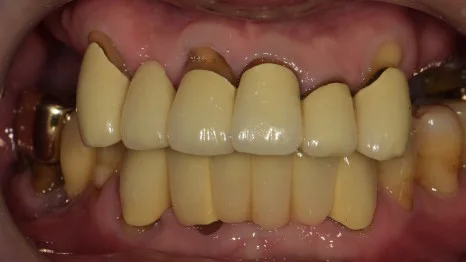
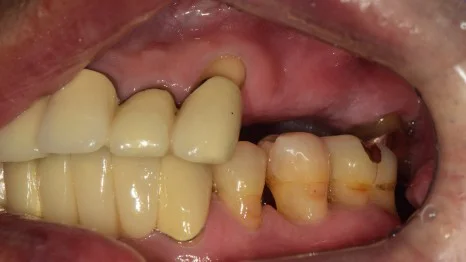
초진 구내 사진을 보면 다수 치아의 상실과 함께, 상악 전치부의 오래된 보철물이 손상된 상태가 관찰됩니다. 하악 구치부에서는 맞물릴 치아가 없어 정출(치아가 솟아오르는 현상)이 나타난 것으로 보였습니다.
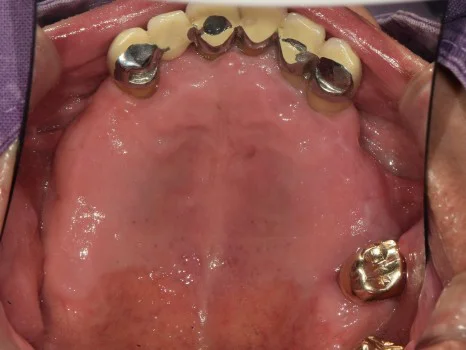
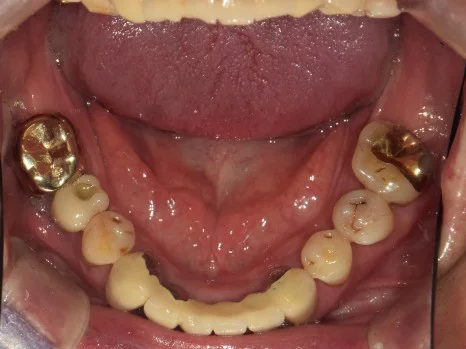
위턱과 아래턱을 교합면에서 살펴보면 남아 있는 치아와 비어 있는 부위, 오래된 보철물이 함께 확인됩니다. 이렇게 여러 문제가 겹쳐 있으면 임플란트 식립뿐 아니라 전치부 보철 수복까지 함께 계획해야 합니다.
상악동 거상술은 왜 필요한가요?

파노라마를 보면 다수 치아의 상실은 물론, 상악의 주요 구조물인 상악동의 막(점막)까지 아래로 내려와 있는 것이 확인됩니다. 상악동은 위턱 어금니 뿌리 위쪽에 있는 빈 공간으로, 치아를 오래 상실하면 이 공간이 아래로 확장되면서 임플란트를 심을 잇몸뼈의 높이가 부족해지는 경우가 많습니다.
이렇게 뼈 높이가 부족한 상태에서 무리하게 임플란트를 심으면 고정이 어렵기 때문에, 거상술이라는 추가 술식으로 상악동 막을 조심스럽게 들어 올리고 그 아래 공간에 뼈를 채워 높이를 확보합니다. 이 사례에서도 상악동 막이 내려와 있어 이 술식이 필요한 것으로 판단되었습니다.
치료는 어떤 순서로 진행되나요?
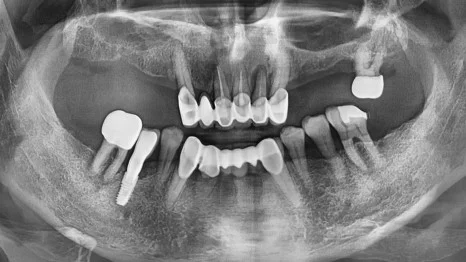
어금니 부위는 거상술을 동반하여 위쪽부터 임플란트 픽스처를 심습니다. 상악동 막을 들어 올려 뼈 높이를 확보한 뒤, 계획한 위치에 픽스처를 식립합니다. 개선이 필요한 방법을 정리하면, 상악동 거상술을 동반한 임플란트 수술과 함께 상악 전치부의 크라운 수복이 함께 필요한 상황이었습니다.
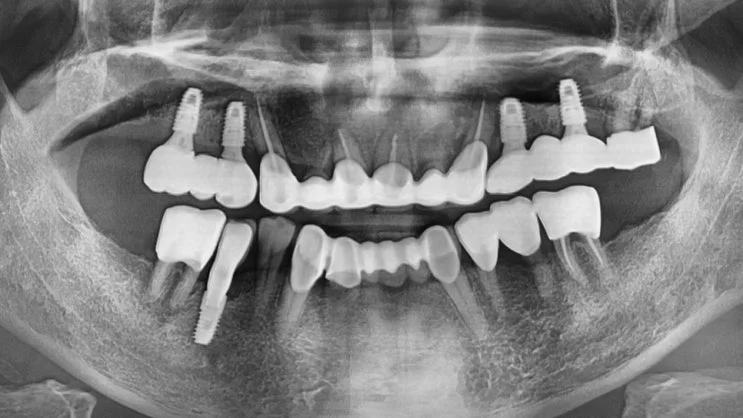
상악 전치부는 오래되어 보철물이 망가져 있었고, 하악 구치부는 정출이 나타난 상태였습니다. 따라서 전치부는 크라운 교체를 통해 손상된 치아를 정리하고, 이후 순차적으로 전치부 치료를 진행하여 전체 구강 기능 회복을 함께 도모합니다. 강동구 임플란트 치료에서도 이렇게 어금니 임플란트와 전치부 보철을 함께 계획해야 하는 경우가 적지 않습니다.
최종 보철 후 어떻게 달라졌나요?

앞니와 하악 어금니의 크라운 제작을 통해 전치부 치아까지 개선을 마치면 모든 치료 과정을 마무리할 수 있습니다. 이전과 달리 튼튼하고 깨끗한 보철물로 바뀐 구강 내 모습을 확인할 수 있습니다.
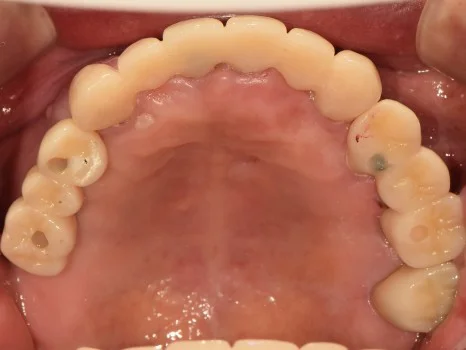
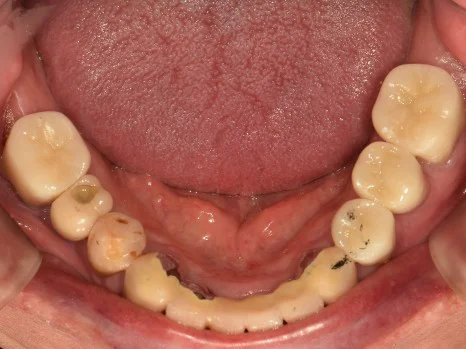
정면과 교합면에서 보면 비어 있던 자리가 임플란트 보철로 채워지고, 손상됐던 전치부 보철도 정리되어 위아래 치아가 자연스럽게 맞물리는 형태로 회복된 것을 확인할 수 있습니다. 이러한 단계적 접근을 통해, 뼈가 부족했던 위턱 어금니 부위까지 기능을 되찾을 수 있었습니다.
상악동 거상술, 회복 기간은 어느 정도인가요?
상악동 거상술은 상악동 막 아래에 뼈를 채워 넣는 과정이므로, 채워 넣은 뼈가 안정되고 임플란트와 골융합이 이뤄지는 데 일정 기간이 필요합니다. 뼈의 상태와 거상 방식, 이식재의 종류에 따라 대기 기간이 달라질 수 있으며, 골융합과 고정력이 충분히 확인된 뒤에 최종 보철을 진행합니다.
이 기간과 방법은 개인의 뼈 높이와 전신 상태에 따라 차이가 크기 때문에, 정밀 진단을 통해 계획을 세우는 것이 중요합니다. 강동구 임플란트 상담에서도 상악 구치부는 특히 뼈 조건을 먼저 확인한 뒤 방식을 결정한다고 안내드립니다.
상악동 거상술은 많이 아픈 수술인가요?
이 수술은 추가 술식이라는 점 때문에 부담을 느끼시는 분들이 많습니다. 다만 거상 방식(뼈 높이가 어느 정도 남아 있는지에 따라 접근 방법이 달라집니다)에 따라 범위와 회복 양상이 다르며, 시술 범위가 넓거나 치료에 대한 두려움이 크신 경우에는 수면(의식하진정법)을 병행하기도 합니다.
어떤 방식이 적절한지는 상악동 막의 상태와 남은 뼈 높이, 전신 건강 상태에 따라 달라지므로, 상담과 검사를 통해 결정하는 것이 바람직합니다.
자주 묻는 질문
Q. 상악동 거상술은 어떤 경우에 하나요?
위턱 어금니 부위에 임플란트를 심을 잇몸뼈 높이가 부족하고 상악동이 내려와 있는 경우에 고려합니다. 뼈 높이를 확보해 임플란트를 안정적으로 심기 위한 과정입니다.
Q. 상악동 거상술을 하면 임플란트를 바로 심나요?
남은 뼈 높이에 따라 다릅니다. 상악동을 거상하면서 동시에 픽스처를 심는 경우도 있고, 뼈를 먼저 채워 안정된 뒤 나중에 식립하는 경우도 있습니다. 진단을 통해 결정됩니다.
Q. 상악동 거상술 후 최종 보철까지 얼마나 걸리나요?
이식한 뼈의 안정과 골융합에 시간이 필요하므로 수개월이 걸리는 편입니다. 뼈 상태와 거상 방식에 따라 기간이 달라지며, 계획 단계에서 대략적인 일정을 안내받으실 수 있습니다.
Q. 위 어금니가 없는데 꼭 상악동 거상술을 해야 하나요?
모든 경우에 필요한 것은 아닙니다. 남아 있는 뼈 높이가 충분하다면 거상 없이 식립하기도 합니다. 뼈가 부족한 경우에 한해 고려하며, 정밀 검사로 판단합니다.
Q. 전치부 보철도 함께 해야 하나요?
이 사례처럼 전치부 보철물이 오래되어 손상된 경우, 어금니 임플란트와 함께 전치부 크라운 수복을 계획하기도 합니다. 전체 구강 기능과 심미를 함께 고려하기 위함입니다.
English Summary
What Is a Sinus Lift? The Implant Process Explained Through a Real Case
The upper back-tooth region is one of the more challenging areas for dental implants. When teeth in the upper jaw are lost for a long time, the maxillary sinus, an air-filled space above the roots of the upper molars, tends to expand downward, and the height of bone available for an implant becomes insufficient. In these situations a sinus lift is often needed before or alongside implant placement. This post explains the sinus lift and the overall implant process through a real case, from diagnosis to the final restoration.
At the first visit, the intraoral photographs showed loss of several teeth together with old, damaged restorations in the upper front region. In the lower back region, the teeth had over-erupted because there were no opposing teeth to meet them. Viewed from the biting surface, remaining teeth, empty areas, and aged restorations were all present at once, which meant the plan had to cover not only implant placement but also restoration of the front teeth. The panoramic image made the key issue clear: along with the missing teeth, the membrane of the maxillary sinus had descended, leaving too little bone height to place an implant securely.
This is exactly why a sinus lift is used. Because forcing an implant into insufficient bone makes stable fixation difficult, the sinus lift carefully raises the sinus membrane and fills the space beneath it with bone to secure the necessary height. In this case, the descended sinus membrane indicated that a sinus lift was needed.
The treatment therefore combined implant surgery with a sinus lift in the back-tooth region, placing the fixtures from the upper side after the membrane had been lifted and the bone height restored, together with crown restoration of the upper front teeth. Since the upper front restorations were old and damaged and the lower back teeth had over-erupted, the front teeth were addressed by replacing the crowns and cleaning up the compromised teeth, and the front-tooth treatment then proceeded in sequence so that overall oral function could be recovered.
Once the crowns for the front teeth and the lower molars were completed, the whole treatment could be finished, and the mouth was restored with sound, clean restorations that looked clearly different from before. From the front and from the biting surface, the previously empty spaces were filled with implant restorations, the damaged front restorations were tidied up, and the upper and lower teeth met in a natural relationship. Through this staged approach including the sinus lift, function was recovered even in the upper back region where bone had been lacking.
It is worth noting that a sinus lift requires healing time, because the grafted bone beneath the sinus membrane needs to stabilize and integrate with the implant; the waiting period varies with the bone condition, the lift technique, and the type of graft material, and the final restoration proceeds only after osseointegration and fixation are sufficiently confirmed. There are broadly two ways the lift is approached depending on how much bone remains: when a reasonable amount of bone height is still present, the sinus floor can be raised through a small opening at the implant site, whereas when very little bone remains, a wider approach from the side of the jaw is used to lift the membrane and place graft material.
The right approach is not chosen by preference but by the actual bone height and the condition of the sinus membrane seen on imaging. Not every upper molar case requires a sinus lift, and when the remaining bone height is adequate an implant may be placed without one; the decision depends on the state of the sinus membrane, the remaining bone height, and the patient’s general health, so it should be made through examination and consultation. When the treatment area is large or the patient feels considerable anxiety, conscious sedation may be used alongside the procedure.
At Seoul The Nature Dental Clinic in Gangdong-gu, Myeongil-dong, the bone condition of the upper back region is checked first and the approach is decided accordingly, so that areas once considered difficult can have their function restored as safely and predictably as possible.
마치며
위턱 어금니 부위는 잇몸뼈가 부족하고 상악동이 내려와 있는 경우가 많아, 임플란트 전에 상악동 거상술이 필요해지는 대표적인 부위입니다. 이 사례처럼 상악동 거상술을 동반한 임플란트와 전치부 보철 수복을 함께 계획하면, 뼈가 부족했던 부위까지 기능과 형태를 재건할 수 있습니다.
다만 상악동 거상술과 임플란트 모두 남은 뼈 높이와 상악동 상태, 전신 조건에 따라 방식과 기간이 크게 달라지므로, 정확한 판단은 검사와 상담을 통해 이루어져야 합니다. 상악 구치부 임플란트에 대한 더 자세한 내용은 아래 가이드도 함께 참고하실 수 있습니다.
강동구 임플란트, 그중에서도 위 어금니 임플란트나 상악동 거상술을 강동구, 명일동에서 고민하고 계신다면, 무리하지 마시고 먼저 진료를 통해 본인의 잇몸뼈와 상악동 상태를 정확히 확인해 보시길 권해 드립니다. 지금까지 서울더자연치과 치과의사 김민수였습니다.