
강동구 임플란트, 다수 치아 상실을 전악 임플란트로 재건
거의 모든 치아를 상실해 밥 먹기조차 힘들었던 분을, 컴퓨터 분석을 통한 전악 임플란트로 저작 기능과 외관을 재건한 실제 사례를 사진과 함께 정리해 드립니다.
안녕하세요, 명일동 강동구 임플란트 전문 치과 서울더자연치과 치과의사 김민수입니다. 오늘은 다수의 치아를 상실한 분을 전체(전악) 임플란트로 재건한 과정을 실제 사례와 함께 정리해 드리겠습니다. 치아를 하나둘 잃다 보면 어느 순간 남은 치아가 얼마 되지 않아, 가장 기본이 되는 식사조차 편하게 하기 어려워지는 경우가 있습니다.
이런 경우 여러 개의 임플란트를 계획적으로 식립해 위아래 치아 기능을 다시 세우는 전체 임플란트가 하나의 방법이 될 수 있습니다. 강동구 임플란트를 고민하시는 분들 중에서도 이렇게 다수 치아를 상실한 경우가 적지 않은데, 식립 개수가 많고 잇몸뼈 상태가 저마다 다르기 때문에 정밀한 진단과 계획이 무엇보다 중요합니다.
초기 상태는 어땠나요?
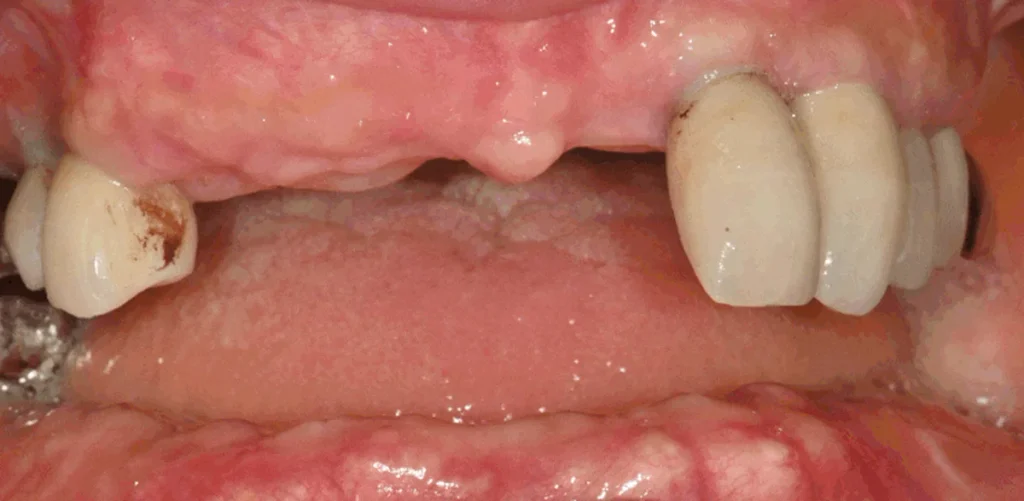
내원 당시 구내 사진을 보면, 비교적 최근에 치료받았던 것으로 보이는 일부 치아를 제외하고는 거의 모든 치아가 빠져 있는 것으로 확인됩니다. 위아래 모두 넓은 범위에 걸쳐 치아가 없는 상태였습니다.
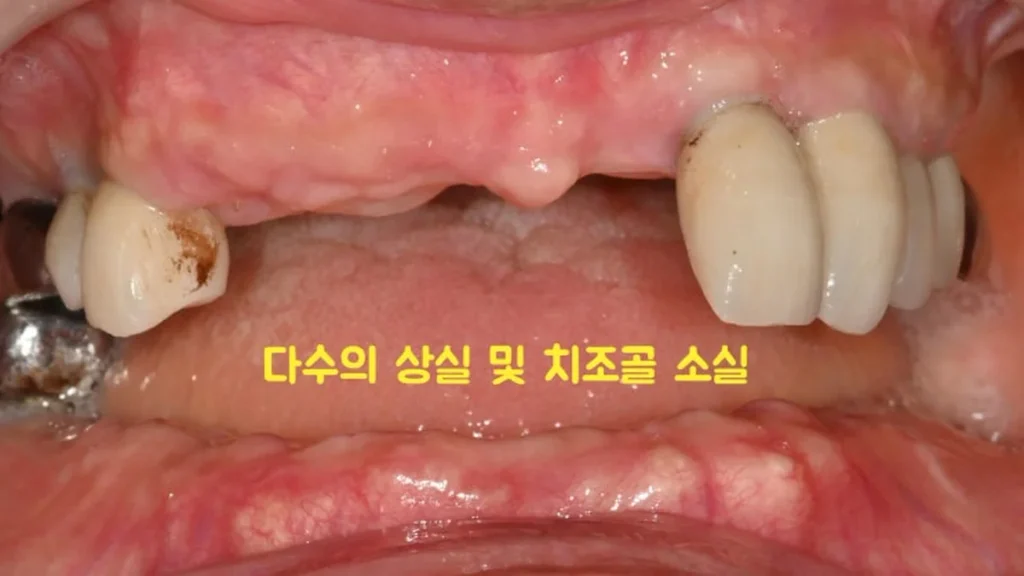
남아 있는 치아 주변으로는 다수의 치아 상실과 함께 치조골(잇몸뼈) 소실도 관찰되었습니다. 이렇게 다수의 상실이 생기면 저작 기능을 제대로 할 수 없기 때문에, 가장 기본이 되는 밥을 먹는 것조차 편하게 하기 어려워집니다. 또한 남은 치아에 힘이 몰리면서 그 치아마저 부담을 받을 수 있고, 얼굴 외형이나 발음에도 영향을 줄 수 있습니다.
전악 임플란트란 무엇인가요?
전악 임플란트는 한두 개의 치아가 아니라, 위턱 또는 아래턱 전체에 걸쳐 다수의 치아를 임플란트로 재건하는 치료를 말합니다. 남은 치아가 거의 없거나 오래된 틀니로 불편함이 큰 경우, 여러 개의 임플란트를 기둥 삼아 고정성 보철을 올려 저작 기능을 회복하는 것을 목표로 합니다.
다수의 임플란트를 식립할 때는 각 임플란트의 위치와 방향이 서로 조화를 이뤄야 하나로 연결된 보철을 안정적으로 올릴 수 있습니다. 따라서 개별 식립보다 전체적인 설계와 계획이 훨씬 중요합니다. 이 사례에서도 위아래에 걸쳐 다수의 임플란트를 식립하는 계획이 필요하다고 판단했습니다.
전악 임플란트는 어떻게 진행되나요?
진행 과정을 순서대로 정리해 드리겠습니다.
1. 컴퓨터 분석을 통한 식립 계획
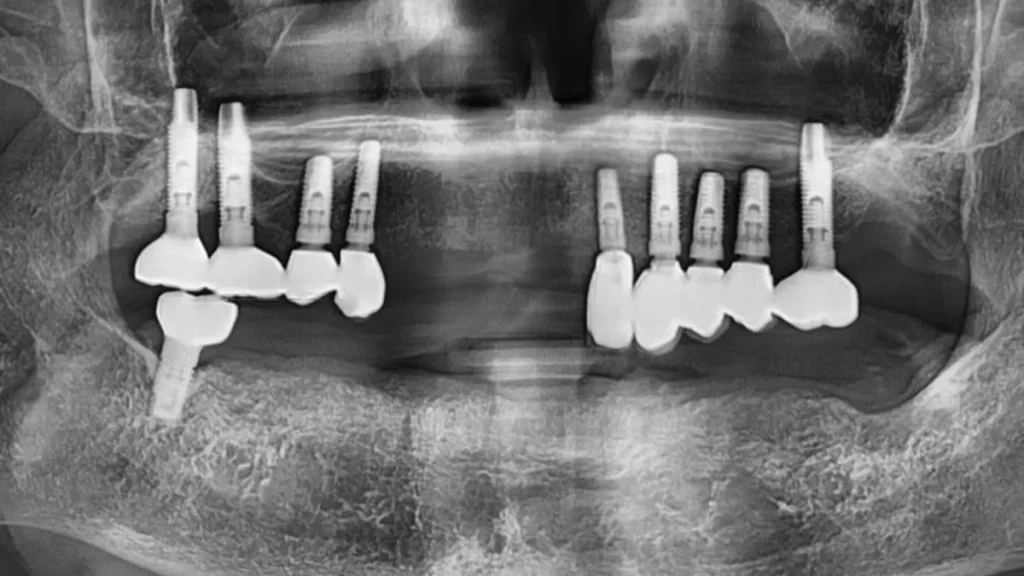
식립해야 할 임플란트 개수가 많기 때문에, 컴퓨터 분석을 진행하여 계획한 위치에 식립합니다. 3차원 영상 분석을 통해 신경과 잇몸뼈, 대합치(맞물리는 치아)와의 관계를 고려하고, 각 임플란트의 위치와 방향을 미리 설계하는 과정입니다. 강동구 임플란트 치과에서 식립 후 파노라마에서 위아래에 여러 개의 임플란트가 자리 잡은 모습을 확인할 수 있습니다.
2. 픽스처 식립 및 골 유착
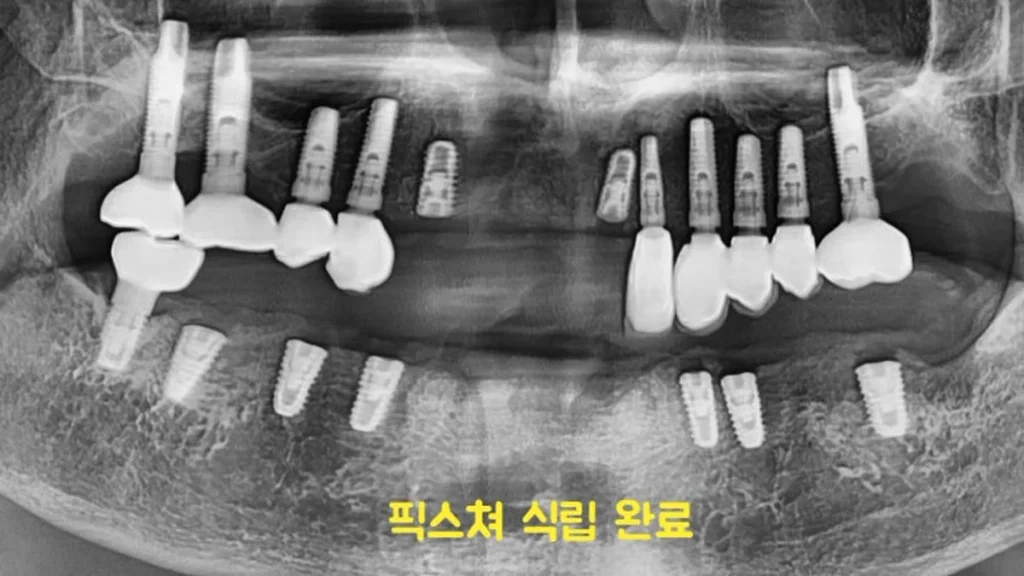
계획한 위치에 픽스처(임플란트 본체)를 식립하면, 픽스처의 종류와 식립 방향·위치 등을 결정해 정확한 곳에 심을 수 있습니다. 식립이 완료된 파노라마에서 다수의 픽스처가 안정적으로 자리 잡은 모습을 확인할 수 있습니다.
이후 픽스처가 잇몸뼈와 단단히 붙는 골 유착 기간을 갖습니다. 이 사례에서는 약 3개월 정도 지난 뒤 고정력을 확인한 후에 최종 보철을 올릴 수 있었습니다. 다만 골 유착 기간과 고정력은 개인의 뼈 상태와 전신 조건에 따라 달라질 수 있습니다.
3. 최종 보철 완성
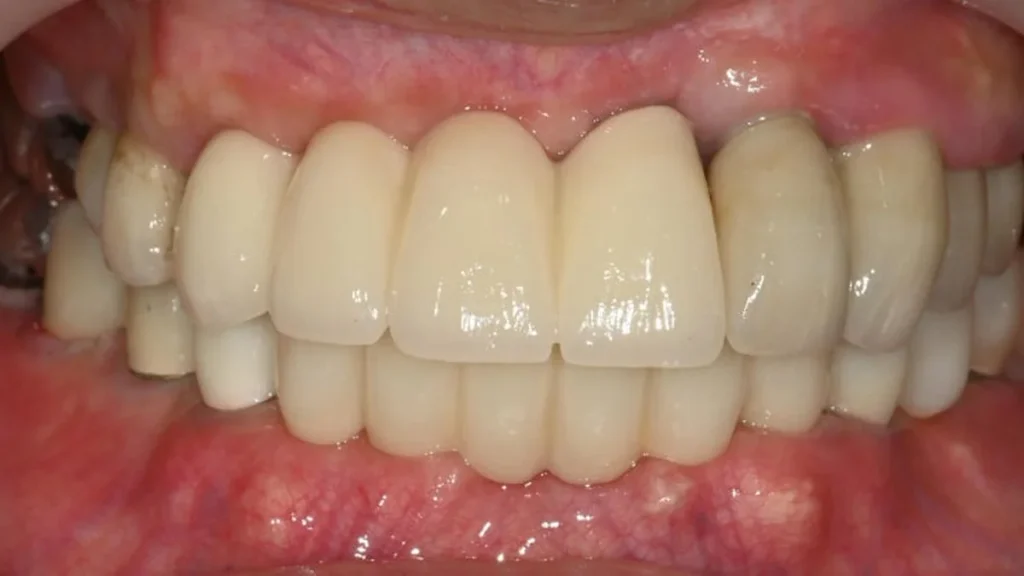
골 유착과 고정력이 확인되면 최종 보철을 제작해 올립니다. 강동구 임플란트 치과에서 최종 보철을 올린 후 정면 사진을 보면, 비어 있던 위아래 치아 자리가 고르게 채워져 잃어버렸던 저작 기능과 외관을 되찾은 것으로 보입니다.
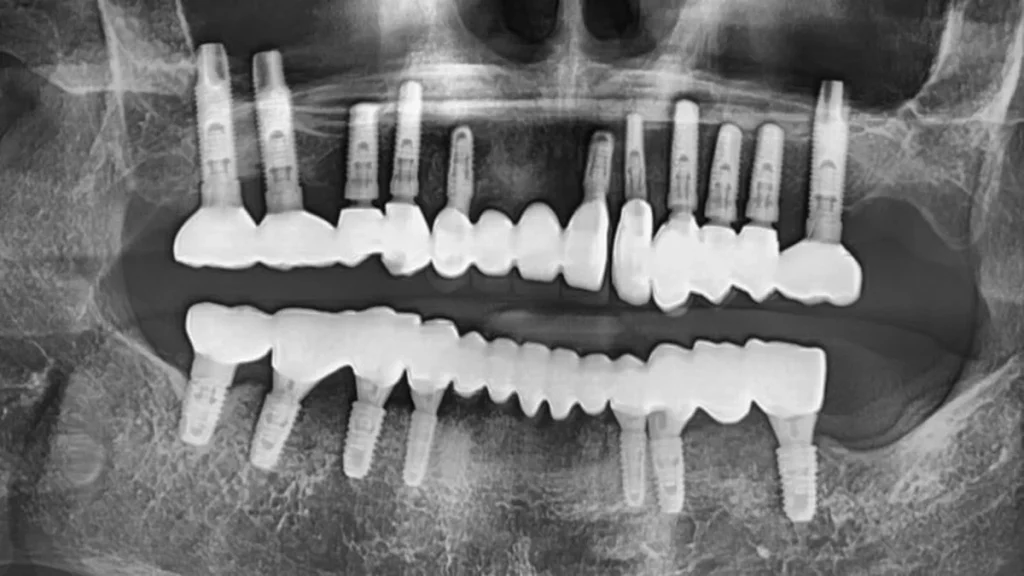
최종 파노라마에서도 위아래 전체에 걸쳐 임플란트와 보철이 조화롭게 재건된 것을 확인할 수 있습니다. 이렇게 다수의 치아를 상실한 경우에도 계획적인 접근을 통해 전악 재건이 가능합니다.
전악 임플란트, 왜 계획이 중요한가요?
전악 임플란트는 식립 개수가 많은 만큼, 한 곳의 위치가 조금만 어긋나도 전체 보철의 형태와 맞물림에 영향을 줄 수 있습니다. 그래서 강동구 임플란트 치과에서는 컴퓨터 분석으로 신경·잇몸뼈·맞물림 관계를 미리 파악하고, 각 임플란트의 위치를 설계한 뒤 진행하는 것이 중요합니다.
또한 치조골이 많이 소실된 경우에는 강동구 임플란트 치과에서 뼈이식 등이 함께 필요할 수 있고, 전신질환(당뇨, 골다공증 등)이나 복용 약물에 따라 계획이 달라질 수 있습니다. 따라서 전악 임플란트는 단순히 개수를 많이 심는 치료가 아니라, 진단과 설계가 결과를 좌우하는 치료라고 이해하시는 것이 정확합니다.
치료 후 관리도 중요합니다
전악 임플란트는 치료를 마친 뒤의 관리가 특히 중요합니다. 임플란트 주위에도 잇몸 염증(임플란트 주위염)이 생길 수 있어, 올바른 칫솔질과 치실·치간칫솔 사용, 정기적인 검진과 전문적인 관리가 함께 이루어져야 오래 사용하는 데 도움이 됩니다.
또한 흡연이나 당뇨 조절 상태, 이갈이 습관 등도 임플란트 유지에 영향을 줄 수 있어, 치료 후에도 개인 상태에 맞는 관리 계획을 함께 세우는 것이 좋겠습니다. 강동구 임플란트를 오래 건강하게 유지하려면 치료만큼이나 꾸준한 사후 관리가 중요합니다.
자주 묻는 질문
Q. 치아가 거의 없어도 임플란트가 가능한가요?
남은 치아가 적더라도 잇몸뼈 상태에 따라 여러 개의 임플란트로 재건하는 것이 가능한 경우가 있습니다. 다만 치조골 소실이 심한 경우에는 뼈이식 등이 함께 필요할 수 있어, 정밀 진단 후 계획을 세우는 것이 중요합니다.
Q. 전악 임플란트는 몇 개를 심나요?
잇몸뼈 상태와 보철 계획에 따라 다릅니다. 위아래 각각 여러 개를 식립해 고정성 보철을 올리는 경우가 많으며, 정확한 개수는 강동구 임플란트 치과에서 진단을 통해 결정됩니다.
Q. 식립 후 바로 최종 보철을 하나요?
그렇지 않습니다. 임플란트가 뼈와 유착되고 고정력이 확인되어야 최종 보철을 올릴 수 있습니다. 이 사례에서는 약 3개월의 골 유착 기간을 두었으며, 기간은 개인차가 있습니다.
Q. 전악 임플란트를 하면 자연치아처럼 씹을 수 있나요?
저작 기능 회복에 도움이 될 수 있지만 회복 정도는 개인마다 다릅니다. 딱딱하거나 질긴 음식은 주의가 필요하며, 정기적인 관리가 병행되어야 안정적으로 사용할 수 있습니다.
Q. 오래된 틀니 대신 전악 임플란트로 바꿀 수 있나요?
가능한 경우가 있습니다. 틀니가 흔들리거나 불편함이 큰 경우 고정성 임플란트 보철이 대안이 될 수 있으나, 잇몸뼈 상태와 전신 조건에 따라 적합 여부가 달라지므로 강동구 임플란트 치과에서 상담이 필요합니다.
English Summary
Full-Arch Implant Reconstruction for Extensive Tooth Loss
Losing teeth one by one can eventually leave so few remaining that even the most basic act of eating becomes difficult. This case describes reconstructing such a situation with full-arch implants, restoring both chewing function and appearance in a patient who had lost nearly all of their teeth. When only a few teeth remain, placing several implants in a planned way to rebuild the upper and lower dentition can be one option, though because the number of implants is large and the condition of the jawbone varies from person to person, precise diagnosis and planning matter more than anything.
At the initial visit, the intraoral photograph showed that apart from a few teeth that appeared to have been treated relatively recently, almost all teeth were missing across both the upper and lower jaws. Around the remaining teeth, loss of the alveolar bone was also visible along with the missing teeth. When this many teeth are lost, chewing cannot be performed properly, so even eating a basic meal becomes uncomfortable. In addition, force concentrates on the few remaining teeth, which can burden them further, and facial appearance and pronunciation can also be affected.
Full-arch implant treatment rebuilds many teeth across an entire upper or lower jaw with implants, rather than just one or two. When there are almost no remaining teeth, or when an old denture causes significant discomfort, the goal is to place several implants as pillars and set a fixed prosthesis on them to recover chewing function. Because the position and direction of each implant must harmonize so that a single connected prosthesis can be placed stably, the overall design and planning are far more important than in a single placement. In this case as well, a plan was needed to place multiple implants across both the upper and lower jaws.
The procedure proceeded in sequence. Because the number of implants to place was large, computer analysis was carried out to place them at planned positions. Through three-dimensional imaging analysis, the relationship to the nerve, the jawbone, and the opposing teeth was considered, and the position and direction of each implant were designed in advance. After placement, the panoramic image confirmed that multiple implants had settled into position across the upper and lower jaws. Once the fixtures were placed, a period was allowed for them to bond firmly with the bone; in this case, the final prosthesis could be placed after confirming stability about three months later, though the healing period and stability vary with each person’s bone condition and general health.
Once osseointegration and stability were confirmed, the final prosthesis was fabricated and placed. In the post-treatment frontal photograph, the previously empty spaces in the upper and lower jaws were evenly filled, appearing to restore the lost chewing function and appearance, and the final panoramic image showed the implants and prosthesis harmoniously reconstructed across both jaws. This illustrates that even when many teeth have been lost, a planned approach can make full-arch reconstruction possible.
Planning is critical precisely because the number of implants is large; if even one position is slightly off, it can affect the shape and bite of the entire prosthesis. For this reason, it is important to grasp the relationship of the nerve, jawbone, and bite through computer analysis and to design each implant position before proceeding. When the alveolar bone has been substantially lost, procedures such as bone grafting may also be needed, and systemic conditions such as diabetes or osteoporosis and any medications can change the plan. Full-arch implant treatment is therefore not simply about placing many implants, but a treatment in which diagnosis and design determine the outcome. Care after treatment is equally important, since inflammation around implants can occur, so proper brushing, use of floss and interdental brushes, and regular check-ups all help the result last. Because each person’s situation differs, an in-person examination and consultation are recommended before deciding on treatment.
It is also worth emphasizing why a computer-guided plan makes such a difference in a full-arch case. A single missing tooth can often be restored with a straightforward placement, but when an entire arch is rebuilt, the implants must work together as a set: their angles, spacing, and depth all influence how the final one-piece prosthesis fits and how the upper and lower teeth meet. Three-dimensional analysis lets the team see the available bone and the path of the nerve before any surgery, so the implants can be positioned where the bone is strongest and the bite will be balanced, rather than discovering limitations during the procedure. This planning stage is also where the need for bone grafting, the choice of fixture type, and the sequence of treatment are decided, which is why two patients with a similar number of missing teeth may still follow quite different treatment paths.
마치며
다수의 치아를 상실하면 저작 기능뿐 아니라 외관과 발음, 남은 치아 건강까지 영향을 받을 수 있습니다. 강동구 임플란트 치과에서는 이 사례처럼 거의 모든 치아를 잃은 경우에도, 컴퓨터 분석을 통한 계획적인 전악 임플란트로 저작 기능과 외관을 재건할 수 있습니다.
다만 잇몸뼈 상태와 남은 치아, 전신 조건에 따라 계획이 달라지므로 정밀 진단이 무엇보다 중요합니다. 강동구, 명일동에서 다수 치아 상실이나 틀니 교체, 전악 임플란트를 고민하고 계신다면 무리하지 마시고 진료를 통해 본인의 구강 상태를 정확히 확인해 보시길 권해 드립니다. 강동구 임플란트 치료 전반이 궁금하시다면 아래 글도 함께 참고해 보시면 도움이 되실 것입니다.
지금까지 서울더자연치과 치과의사 김민수였습니다.
※ 본 포스팅은 의료법 제56조 제1항의 의료광고 규정을 준수하여 작성되었으며, 실제 내원 환자분의 동의하에 공개된 사진입니다. 개인에 따라 진료 및 치료 방법, 효과와 부작용이 다르게 나타날 수 있으며, 진료 전 전문 의료진과의 충분한 상담을 권해 드립니다.