
명일동 치과 삐뚤어진 앞니 부분교정, 하악 앞니 배열 개선
설측으로 들어가 있던 하악 앞니를 부분교정으로 개선한 실제 사례입니다. 어떤 문제가 있었고 어떻게 배열을 잡아가는지 사진과 함께 설명드립니다.
안녕하세요, 명일동 강동구 부분교정 전문치과 서울더자연치과 치과의사 김민수입니다. 오늘은 앞니 부분 교정에 대해 실제 사례를 보며 설명드리려고 합니다. 어떤 문제가 있을 수 있는지, 개선할 수 있는 방법은 무엇인지 예시 사진과 함께 정리해 드리겠습니다.
초기 상태는 어땠나요
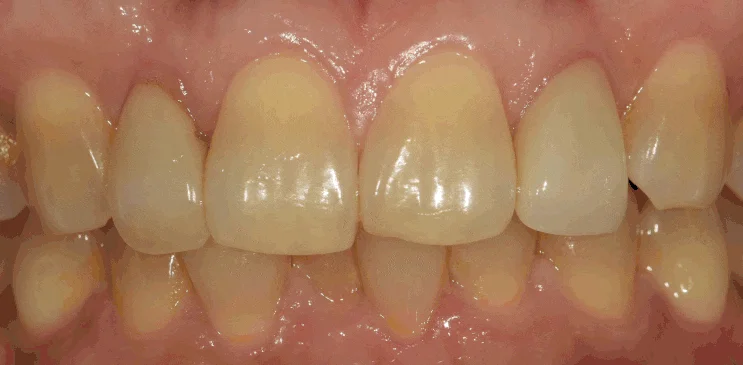
내원 당시 구내 사진을 보면 하악 앞니가 고르지 않게 배열되어 있는 모습이 확인됩니다. 특히 앞니 하나가 안쪽(설측)으로 들어가 있어 전체적인 앞니 라인이 매끄럽지 않은 상태로 보입니다.
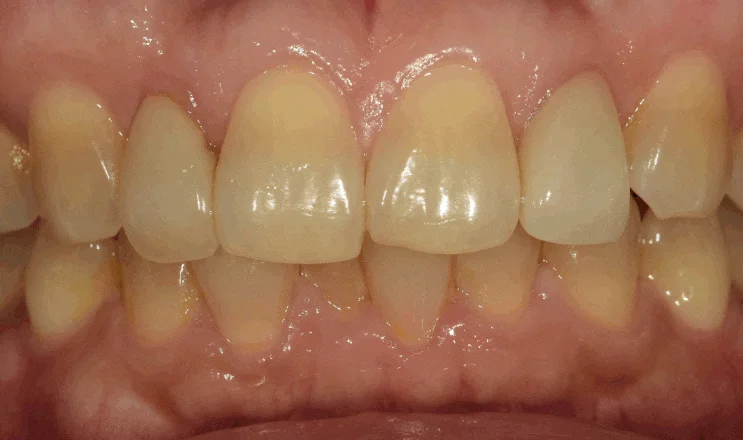
정면 교합 상태를 살펴보면 아래 앞니 문제뿐만 아니라, 윗니가 아랫니를 과하게 덮는 과개교합 양상도 함께 관찰됩니다. 또한 상악의 경우 양쪽 앞니 길이가 달라, 전체적인 개선을 고려한다면 상하악 전체 치열을 다루는 접근이 필요할 수 있는 상태로 보입니다.
다만 환자분께서 부분적인 개선을 우선 원하시는 상황을 고려하여, 오늘은 강동구 부분교정 치과에서 하악만 부분 교정하는 과정을 중심으로 설명드리겠습니다.
부분교정은 어떻게 진행되나요
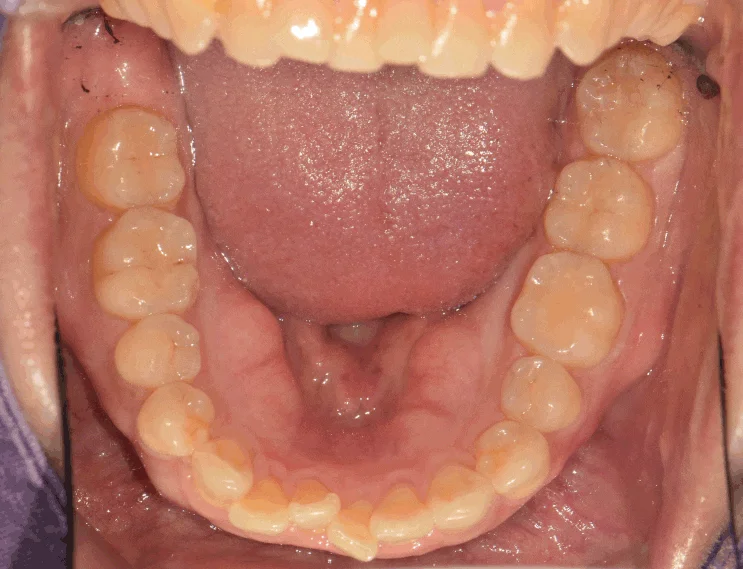
이 사례에서는 하악에만 브라켓을 부착하여 부분 이동을 진행하는 것이 좋겠다고 판단했습니다. 삐뚤어진 하악 앞니에 브라켓을 붙이고, 고른 배열로 이동을 유도하는 방식입니다.
부분교정은 전체 교정에 비해 다루는 범위가 제한적인 만큼, 소요 기간이 비교적 짧은 편이고 비용 부담도 덜한 편입니다. 그래서 전체 치열이 아닌 특정 부위의 부분적인 개선을 원하시는 분들께 하나의 선택지가 될 수 있습니다. 다만 부분교정이 모든 경우에 적합한 것은 아니며, 교합 상태에 따라 전체 교정이 더 적절할 수 있으므로 사전 진단이 중요합니다.
교정 후 어떻게 달라졌나요
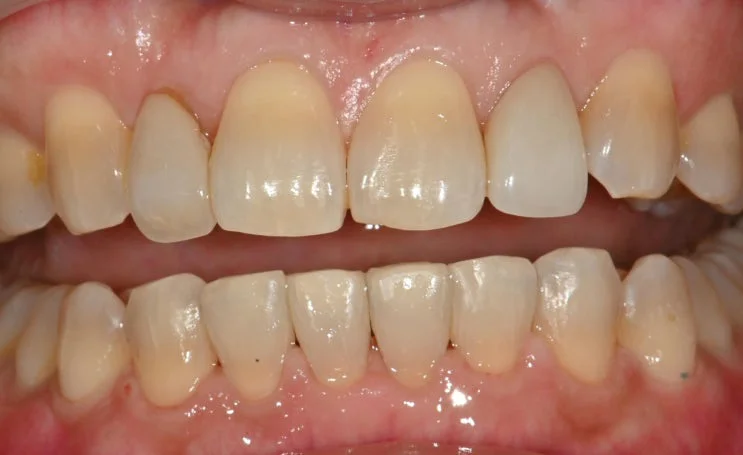
교정을 진행한 뒤 사진을 보면, 이전과 달리 설측으로 들어가 있던 앞니 하나가 올바른 배열로 자리 잡은 것을 확인할 수 있습니다.

정면에서 보아도 하악 앞니 라인이 이전보다 고르게 정리된 모습입니다. 부분교정을 통해 목표로 했던 하악 앞니 배열이 개선된 결과입니다.
강동구 부분교정치료 후
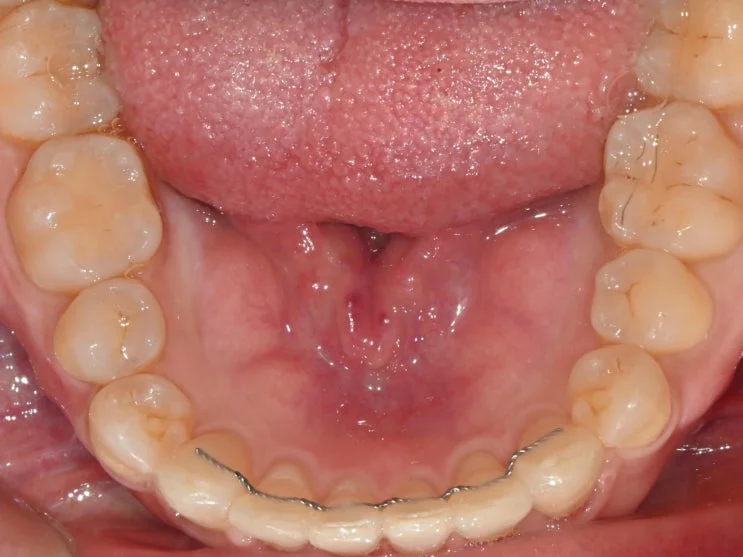
고르게 배열된 치열이 다시 틀어지지 않도록 고정식 유지장치(설측 고정식 리테이너)를 부착하면 과정이 마무리됩니다. 교정 후에는 치아가 원래 위치로 돌아가려는 성질이 있어, 유지장치를 통해 배열을 안정적으로 유지하는 단계가 중요합니다.
자주 묻는 질문
Q. 부분교정은 누구나 받을 수 있나요?
그렇지는 않습니다. 삐뚤어진 정도가 제한적이고 교합에 큰 문제가 없는 경우에 고려될 수 있으며, 과개교합처럼 전체적인 교합 개선이 필요한 경우에는 전체 교정이 더 적절할 수 있습니다. 사전 진단을 통해 적합 여부를 확인하는 것이 좋습니다.
Q. 부분교정은 기간이 얼마나 걸리나요?
다루는 범위가 제한적이라 전체 교정보다 기간이 짧은 편이지만, 이동해야 하는 치아의 상태와 개수에 따라 개인차가 있습니다. 정확한 기간은 진단 후 안내가 필요합니다.
Q. 과개교합이 있어도 부분교정만 하면 되나요?
과개교합은 윗니가 아랫니를 과하게 덮는 상태로, 근본적인 개선을 원하신다면 상하악 전체를 함께 다루는 접근이 필요할 수 있습니다. 이 사례에서는 환자분이 부분적 개선을 우선하여 하악 부분교정을 진행했습니다.
Q. 교정이 끝나면 바로 마무리되나요?
아닙니다. 교정 후에는 치아가 원래 위치로 돌아가려는 경향이 있어 유지장치 부착이 중요합니다. 고정식 또는 가철식 유지장치를 통해 배열을 안정적으로 유지하는 단계가 필요합니다.
Q. 부분교정 비용은 전체 교정보다 저렴한가요?
다루는 범위가 좁은 만큼 전체 교정에 비해 비용 부담이 덜한 편입니다. 다만 개인의 상태와 치료 계획에 따라 달라지므로 상담을 통해 확인하시는 것이 좋습니다.
English Summary
Partial Orthodontic Treatment for a Misaligned Lower Front Tooth
A patient visited with concern about uneven lower front teeth. On the initial intraoral photographs, one of the lower incisors was positioned toward the tongue side, so the front tooth line did not appear smooth. Examining the bite from the front revealed more than the lower tooth issue alone: there was also a deep bite pattern in which the upper teeth excessively covered the lower teeth, and the two upper front teeth differed in length. Taken together, a comprehensive improvement would involve addressing the full arch on both the upper and lower jaw.
However, the patient primarily wanted a partial improvement, so the plan focused on partial orthodontic treatment of the lower jaw only. In this approach, brackets are attached to the misaligned lower front teeth, and controlled movement is guided to bring them into an even arrangement. Because partial orthodontics addresses a limited area rather than the entire dentition, the treatment period tends to be relatively short and the cost burden is generally lower. This makes it a possible option for those who want to improve a specific area rather than the whole bite.
It is important to note that partial orthodontics is not suitable for every situation. When the overall bite needs correction, as with a pronounced deep bite, full orthodontic treatment may be more appropriate. For this reason, a careful diagnosis beforehand is essential to determine whether a partial approach fits the individual’s condition. The decision was made here based on the patient’s priorities together with the clinical assessment.
After treatment, the photographs showed that the lower incisor that had been positioned toward the tongue side had moved into proper alignment. Viewed from the front, the lower front tooth line appeared more even than before, reflecting the improvement in the arrangement that had been the goal of the partial treatment. The visible change was limited to the area that was treated, consistent with the nature of a partial approach.
Once even alignment is achieved, the process is completed by attaching a fixed retainer on the tongue side of the teeth so that the corrected arrangement does not relapse. After orthodontic treatment, teeth have a natural tendency to drift back toward their original positions, so the retention stage is an important part of maintaining the result. A retainer, whether fixed or removable, helps keep the alignment stable over time.
This case illustrates that orthodontic planning depends on both the clinical findings and the patient’s goals. A partial approach can be a reasonable choice for a limited concern, while a fuller approach may be needed when the bite itself requires correction.
It also helps to understand a few background points about how partial orthodontics works and where its limits lie. Brackets attached to specific teeth apply gentle, continuous force that gradually guides those teeth into a more even arrangement. Because only a portion of the dentition is involved, the mechanics are simpler than a full-arch case, which is part of why the treatment period and cost tend to be lower. At the same time, moving a few teeth without accounting for the overall bite can sometimes create new contact issues, which is exactly why a thorough assessment of how the upper and lower teeth meet is done before starting. In this case, the deep bite and the difference in upper incisor length were noted, and the decision to treat the lower jaw only was made with those findings in mind alongside the patient’s wish for a focused improvement.
The retention phase deserves emphasis as well. Teeth are held in place by fibers and surrounding bone that remodel over time, and immediately after active movement these supporting structures have not fully stabilized. A fixed retainer bonded to the tongue side of the corrected teeth helps hold the new positions while the tissues settle. Skipping or neglecting retention is one of the more common reasons that alignment can gradually relapse, so this final step is treated as an essential part of the process rather than an optional add-on.
Because each person’s alignment and bite differ, an in-person examination and consultation are recommended before deciding on a treatment plan. Individual results can vary, and the appropriate method should be confirmed through diagnosis rather than assumed from a single example. Anyone weighing partial versus full orthodontic treatment is encouraged to have their specific bite evaluated so that the plan fits their own situation.
마치며
삐뚤어진 앞니는 부분교정으로 개선할 수 있는 경우가 있지만, 교합 상태에 따라 접근 방식이 달라집니다. 이 사례처럼 과개교합이 함께 있는 경우에는 전체적인 개선이 필요한지, 부분적인 개선으로 충분한지를 사전 진단을 통해 판단하는 것이 중요합니다.
강동구, 명일동에서 앞니 배열이나 교정을 고민하고 계신다면 무리하지 마시고, 진료를 통해 본인의 교합과 치열 상태를 정확히 확인해 보시길 권해 드립니다. 교정을 비롯한 구강 전반의 치료가 궁금하시다면 아래 글도 함께 참고해 보시면 도움이 되실 것입니다.
지금까지 서울더자연치과 치과의사 김민수였습니다.
※ 본 포스팅은 의료법 제56조 제1항의 의료광고 규정을 준수하여 작성되었으며, 실제 내원 환자분의 동의하에 공개된 사진입니다. 개인에 따라 진료 및 치료 방법, 효과와 부작용이 다르게 나타날 수 있으며, 진료 전 전문 의료진과의 충분한 상담을 권해 드립니다.